
Bottle Blowing Machine for Beverage Filling Lines
PET bottle blowing equipment and air conveyor matching for water, juice, tea, carbonated drink and edible oil filling projects.
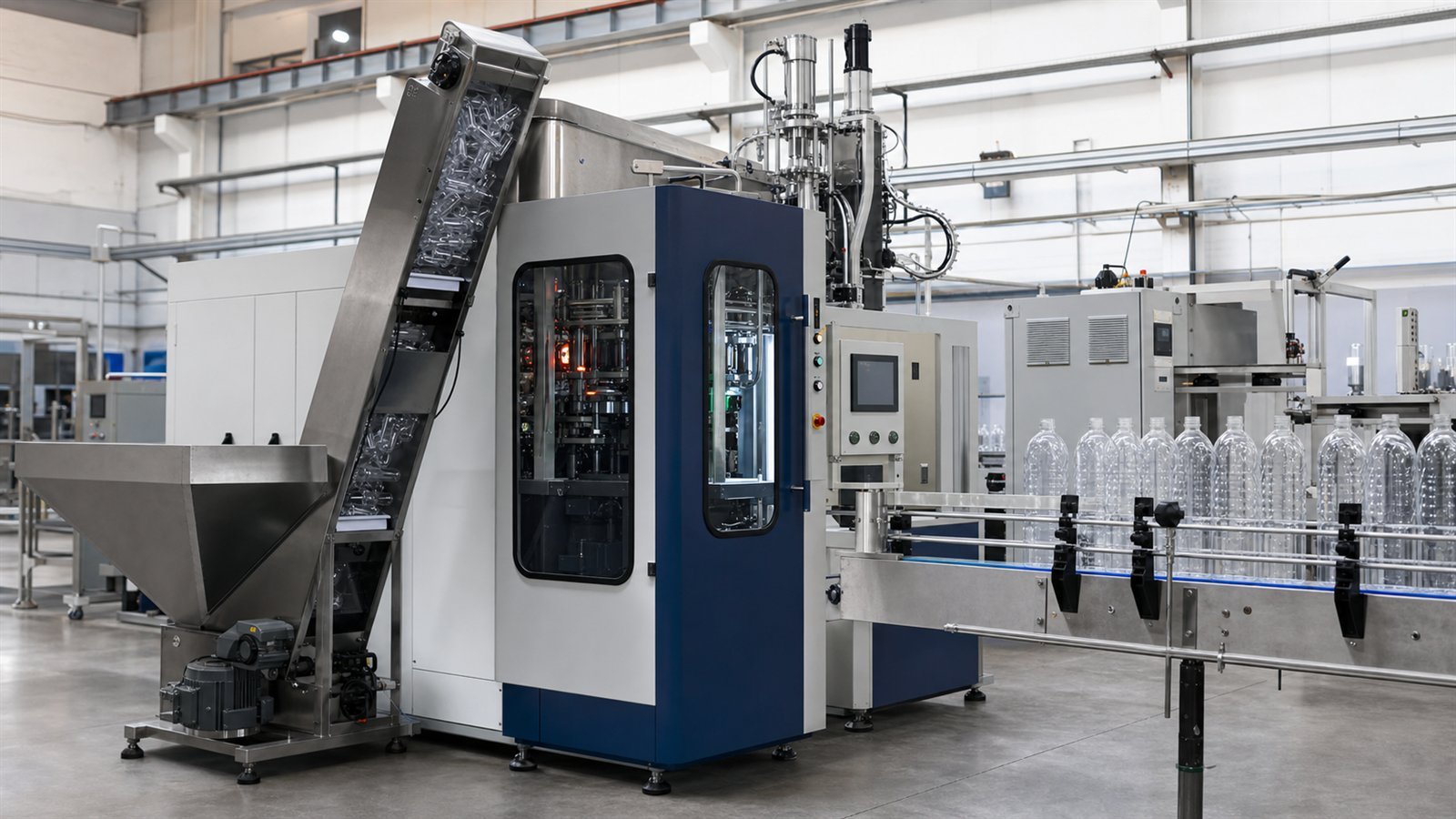
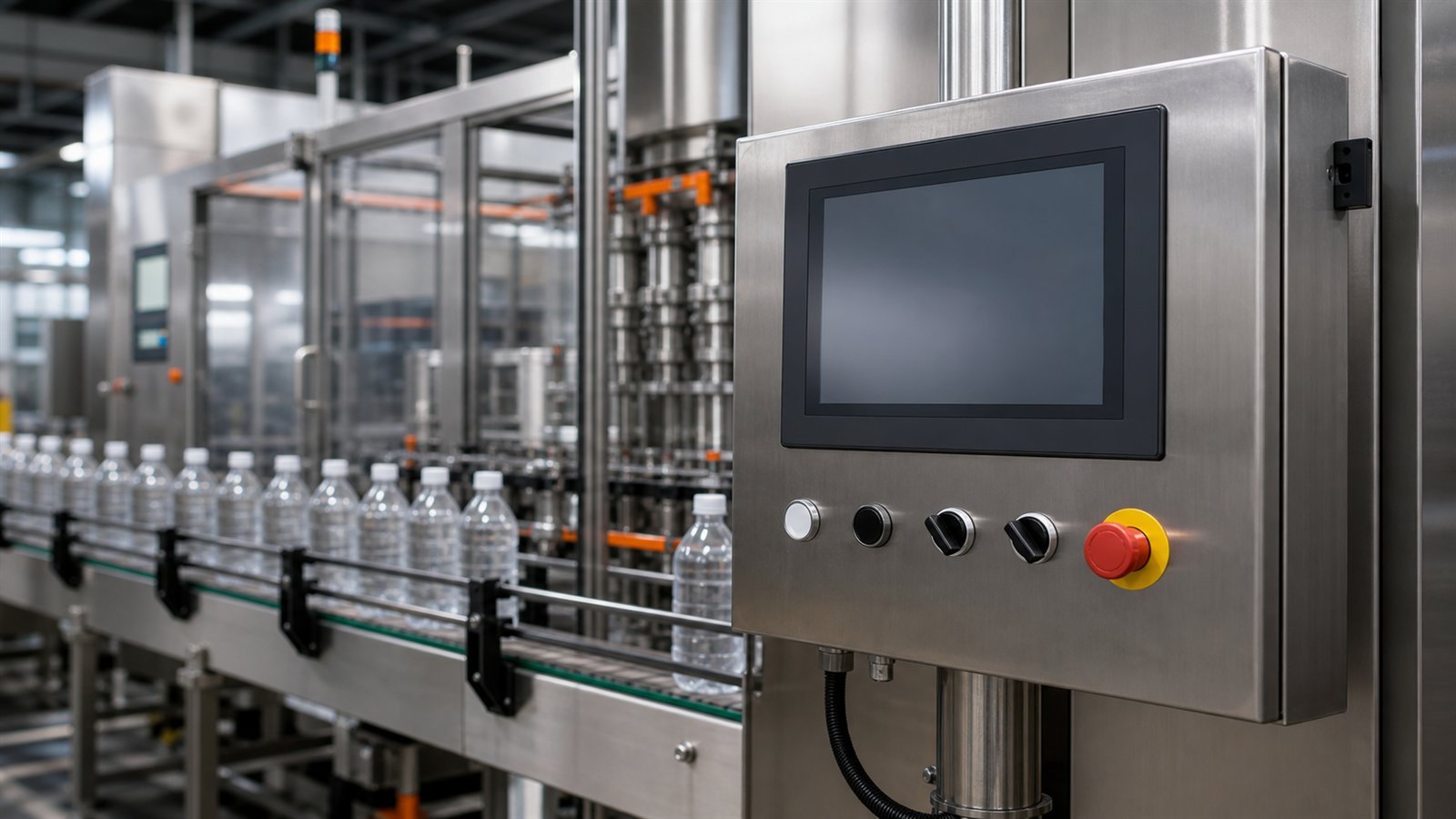
Configuration points before quotation
| Bottle material | PET bottle size, neck finish, preform weight and bottle shape. |
|---|---|
| Line matching | Air conveyor, bottle unscrambler, rinser, filler, capper and labeler compatibility. |
| Utilities | Air compressor, cooling water, voltage, floor space and operator access. |
Practical selection support before quotation
Estimate machine scope by capacity, bottle size, filling technology and packaging level.
Check water, air, power, floor space, conveyors and future expansion.
Match filling, capping, labeling, coding, packing and treatment modules.
Use photos, videos, drawings and checklists before production and shipment.
Confirm contact material, electrical standard, packing method and test videos.
Coordinate export packing, documents, shipping method and destination needs.
Prepare manuals, wiring, commissioning points and remote communication.
Keep spare-parts logic and troubleshooting contact available after delivery.
Send these details for a useful recommendation
| Product | Water, juice, tea, carbonated drink, oil, sauce, detergent, cosmetics, dairy or other liquid. |
|---|---|
| Container | PET bottle, glass bottle, jar, can, HDPE bottle, gallon bottle; size, neck, cap and label type. |
| Capacity | Bottles per hour, filling volume, number of SKUs and expected shift time. |
| Line Scope | Only filling machine, or treatment, blowing, capping, labeling, coding, packing and conveyors together. |
| Destination | Country, voltage, shipping preference and installation support needs. |
Send product, bottle and capacity details
Allot Tech (Suzhou) Co., Ltd. was founded in 2019. We honestly combine new-media communication and China manufacturing export sourcing so global buyers can find practical equipment options.
Email: sales@allottech.com
USA: +1 818 262 0958
China: +86 186 6213 1120
One-Stop Beverage Equipment Solutions | We Ship Worldwide from China
Buyer decision brief
Size PET bottle blowing as part of the filling line
A PET blower does not operate in isolation. Preform design, bottle geometry, molds, oven settings, high-pressure air, cooling and the discharge interface determine bottle quality and whether the filler receives stable containers at the required rate.
Selection matrix
Decisions to resolve before supplier comparison
| Decision area | Define in the RFQ | Why it changes the equipment |
|---|---|---|
| Preform and bottle | Neck, weight, resin, stretch ratios and approved bottle drawing. | Poor matching can create thin corners, unstable bases or uneven wall distribution. |
| Cavity and output | Required bottles per hour by size and the sustained cycle window. | Nominal cavity output must allow for heating, cooling, rejects and format mix. |
| Compressed air | Low-pressure control air and high-pressure blow demand at site conditions. | Receiver, dryer, filters, piping and pressure drop can limit real machine output. |
| Molds and changeover | Mold sections, base, neck handling, cooling and lifting method. | Complete change time includes cooling, warm-up, recipe and first-piece approval. |
| Filler transfer | Air conveyor, buffer or blow-fill connection with stable bottle cooling. | Lightweight bottles must reach filling without deformation, scuffing or starvation. |
Quotation inputs
Information to send
- Preform and final bottle drawings with resin and target weight.
- Every bottle format, neck standard and hourly production target.
- Top-load, drop, thermal or pressure performance requirements.
- Available air pressure, flow, dew point and cooling-water conditions.
- Mold scope, change frequency and storage or lifting arrangement.
- Discharge elevation and interface to the downstream filling line.
Acceptance evidence
What to verify
- Measure dimensions and wall distribution across all cavities.
- Record oven recipe, pressure, cycle, rejects and sustained output.
- Test top load, leak, drop or thermal performance as agreed.
- Verify high-pressure air stability during a continuous production run.
- Run bottles through conveying, filling, capping and final packing.
Buyer questions
Questions to settle before an order
How many blowing cavities are required?
Cavity count follows the required sustained bottle rate, bottle size, validated cycle and efficiency allowance. The blower should be balanced with the filler rather than sized from a theoretical cycle alone.
Why does PET blowing need high-pressure air?
High-pressure air expands the heated preform against the mold during stretch blow molding. Pressure, flow, dryness, filtration, receivers and piping must support the peak cycle at the machine inlet.
Can one mold make several bottle sizes?
A mold is normally dedicated to a defined bottle geometry. Some neck and machine parts may remain common, but bottle-body shape, base and process recipe require matched tooling and validation.
What bottle tests belong in acceptance?
Typical agreed checks may include dimensions, weight distribution, wall profile, top load, leak, drop, visual defects and stable downstream handling. The required tests depend on the bottle and filled-product process.
PET bottle blowing buyer answers
Select a PET bottle blowing machine by preform, bottle design, air and filler rate
A PET bottle blower converts a defined preform into a defined container at a defined cycle. The useful selection variables are preform neck and weight, bottle geometry, resin, cavity count, heating response, high-pressure air, cooling, molds, bottle quality and the transfer rate into rinsing and filling. This guide helps buyers compare a standalone blower and a blow-fill connection without relying on empty machine claims.
Buyer workflow
Specify the blowing system from bottle performance backward
Bottle quality and air capacity set the practical ceiling. The blower should be balanced with the filler and final package, not selected in isolation.
Freeze the bottle drawing
Define volume, neck finish, weight, height, diameter, base, pressure or heat behavior and the required filled-package performance.
Match the preform
Specify resin, neck, length, weight, wall distribution and supplier. The preform is part of the process, not a generic consumable.
Calculate the real cycle
Use cavity count, cycle time, heating, cooling, rejects, format changes and sustained efficiency to calculate good bottles per hour.
Size air and cooling
Confirm high-pressure air flow, pressure, quality, receiver, dryer, filtration, piping drop and cooling conditions at the machine inlet.
Choose the architecture
Compare standalone blowing with air-conveyor transfer against a blow-fill-cap block by hygiene, footprint, flexibility, redundancy and service.
Test the bottle downstream
Run blown bottles through conveying, rinsing, filling, capping and packing so lightweight-container issues are discovered before shipment.
Direct answers
PET bottle blowing machine questions buyers ask before ordering
These answers focus on the evidence a buyer can request before approving a configuration, quotation or shipment.
How do I choose a PET bottle blowing machine?
Begin with the final bottle drawing, preform, target good output and package performance. Then evaluate cavity count, cycle, oven, stretch system, mold, high-pressure air, cooling and discharge. A machine that makes a sample bottle may still fail at sustained speed or downstream transfer. Ask for output by bottle format and a test using the agreed preform and mold rather than a general maximum.
Why is the preform specification so important?
Preform neck, weight, length, resin, moisture, storage and wall distribution affect heating and stretching. A preform designed for still water may not be correct for a pressure-rated carbonated bottle, hot-fill container, wide-mouth jar or large water bottle. Confirm the neck with the closure and filling line. Keep the approved preform revision in the machine and mold documentation.
How many blowing cavities do I need?
Cavity count follows the required good bottle rate, validated cycle and efficiency allowance. It also depends on bottle size and the available filler rate. More cavities can increase output but may raise mold cost, air demand, heating complexity and quality variation. Ask the supplier to show the calculation for the largest or most difficult bottle and include planned rejects and format changes.
How much high-pressure air does a PET blower need?
Air demand depends on bottle volume, pressure, pre-blow, final blow, recovery, cycle and machine architecture. Specify free-air delivery, pressure, dew point, filtration and receiver conditions at the machine, not only compressor motor power. Include pressure drop in piping and peak simultaneous demand. Validate air stability during continuous production because insufficient air can reduce output and bottle quality.
Should I choose a standalone blower or a blow-fill-cap block?
A standalone blower can provide layout flexibility, independent maintenance and the ability to feed a filler through an air conveyor. A block can reduce empty-bottle handling and footprint while linking the processes more tightly. Compare hygiene, format flexibility, redundancy, service access, future expansion and local skills. The best architecture depends on the line scale, package and business need, not a universal claim.
What bottle quality tests belong in acceptance?
Agree dimensions, weight, wall distribution or critical thickness, visual defects, leak, top load, drop, pressure or thermal performance as appropriate to the bottle. Also check neck finish and downstream handling. Use production-intent preforms and run across cavities. Record reject rate and stable output. The correct tests depend on product, container and destination requirements, so define them before FAT.
How do heating and cooling affect blown-bottle consistency?
Preform moisture, lamp condition, oven recipe, rotation, stretch timing, mold temperature, cooling channels and ambient conditions all affect material distribution. A recipe that works on one preform lot may drift when weight or resin changes. Request an approved process window and record oven, air and cooling settings during testing. Plan access for lamp, mold and cooling maintenance.
Can one blowing machine make different bottle sizes?
A machine may handle an agreed range, but each bottle can require a dedicated mold, neck parts, preform holders, oven recipe, stretch settings and air program. The smallest and largest formats may have different output and quality limits. List every intended bottle before quotation and obtain the complete mold and changeover scope, including lifting, storage and first-piece approval.
How should a PET blower be matched to the filler?
Match sustained good empty-bottle output to the filler’s required containers per hour, allowing for buffer, rejects, mold change, maintenance and line stops. Confirm discharge height, bottle orientation, air conveyor or transfer, bottle temperature and base support. A blower can be fast while the filler starves, or a filler can wait because bottle quality or air supply is unstable.
What should I verify before buying a bottle blowing machine from China?
Verify the contracting company, machine scope, mold ownership, preform and bottle responsibility, component schedule, air and utility requirements, quality tests, FAT conditions, packing, documents, installation and spares. Ask the supplier to demonstrate the actual bottle family and explain what is manufactured, integrated or outsourced. Do not treat a factory photo or a headline cavity count as proof of your production result.
Buyer inputs
Send a PET blowing machine design basis
- Bottle drawings, volume, weight and neck finish.
- Preform drawing, resin, supplier and sample lot.
- Required good output by bottle format.
- Pressure, heat, drop, top-load and leak targets.
- Air pressure, flow, quality and cooling conditions.
- Mold range, changeover frequency and line interface.
- Destination, layout, utilities and service plan.
Supplier response
Require blowing-system evidence
- Cycle and good-output calculation by format.
- Mold, preform-holder and change-parts schedule.
- Air, cooling, power and utility consumption data.
- Bottle-quality and downstream-transfer test plan.
- Oven, stretching, pressure and recipe documentation.
- Packing, installation, training and spares scope.
- FAT records with cavity-level results and rejects.
Transparent sourcing
Coordinate bottle-making evidence with the filling project
Allot Tech (Suzhou) Co., Ltd. was founded in 2019 and moved from a new-media and online-communication background toward manufacturing sourcing and export coordination in 2025. We help buyers organize bottle, preform, air and filler-interface information for Chinese equipment partners. The final mold, process and quality claims must be verified in the supplier’s technical documents and representative testing.
Continue your research
Related equipment and procurement guides
Use the next page that matches your product route, package, machine type or purchasing stage.
Plan the bottle blower and filling line together
Bottle output alone is not enough to size a PET blowing system. Preform design, bottle volume, mold cavities, high-pressure air, cooling, air-conveyor distance and filler accumulation all affect the complete line. Share the bottle drawing and target production plan before selecting the blower configuration.
Interfaces to confirm
- Preform neck finish and bottle drawing
- Mold and bottle-change requirements
- High- and low-pressure air demand
- Cooling-water and electrical requirements
- Air-conveyor connection to the filler
- Buffer strategy during downstream stops
PET bottle supply
Match the blower, mold, preform and compressed-air system
Bottle quality and available bottle output affect filling-line stability. A proposal should state the reference bottle, cavity count and utility basis.
| Project area | Buyer input to confirm | Engineering output |
|---|---|---|
| Bottle family | Volume, weight, neck, shape, heat or pressure duty | Bottle drawing, samples and mold responsibility |
| Preform and heating | Preform specification, resin, color and heating window | Compatible oven and process settings |
| Utilities and transfer | Low- and high-pressure air, cooling and bottle output | Compressor, dryer, receiver and air-conveyor scope |
What the recommendation should define
A bottle-output calculation and utility schedule that aligns the blower with air conveying and the downstream filler.