
Can Filling Line for Beer, Soda and Functional Drinks
Can filling, seaming and packing support for carbonated soft drinks, beer, soda water and functional beverages.
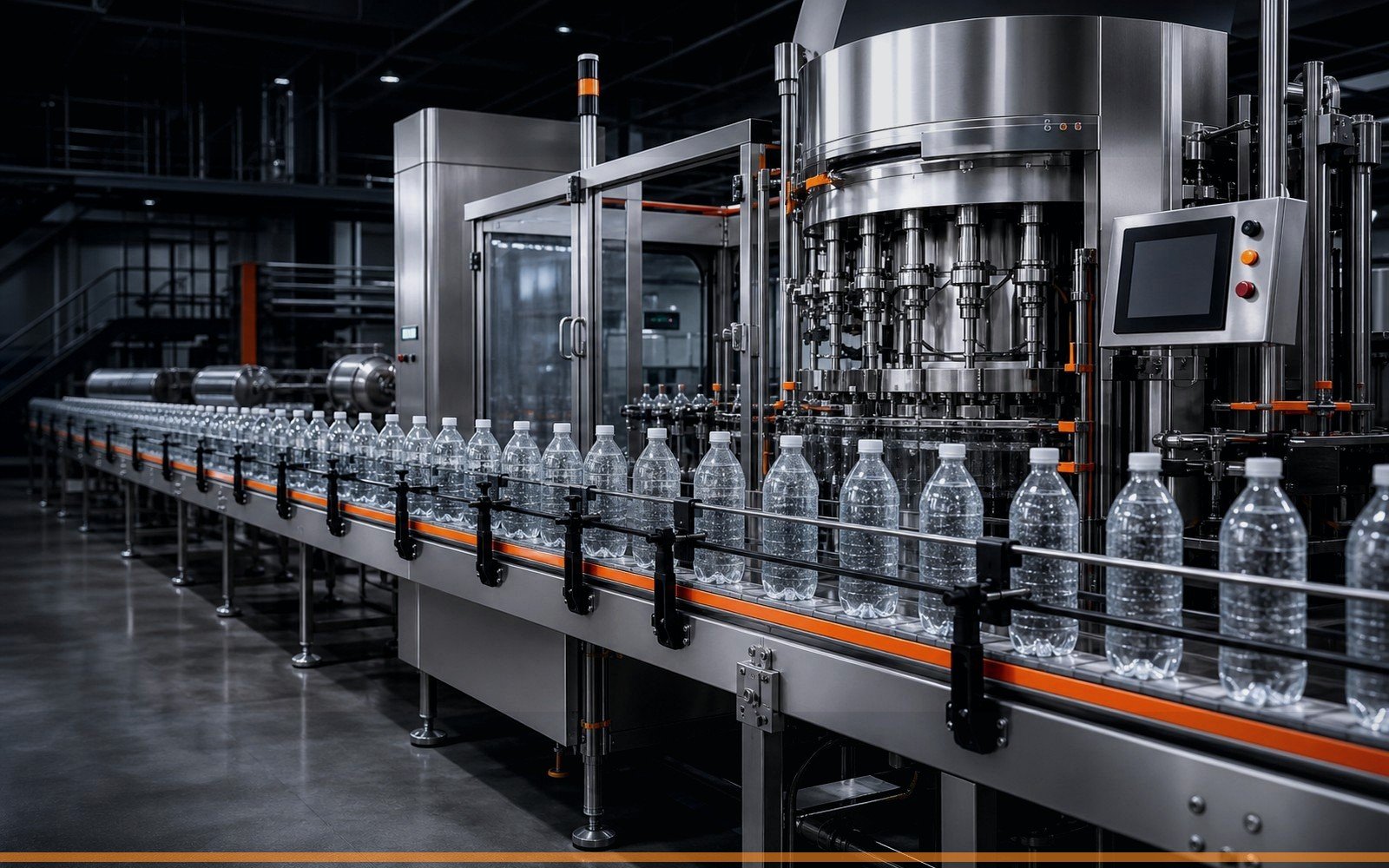
What This Solution Covers
Can lines require accurate filling, sealing quality, CO2 control for carbonated products and smooth pack handling. We help configure can filling projects from empty can handling to finished cartons or trays.
Carbonated soft drinks
Isobaric filling and seaming for soda water, sparkling drinks and energy drinks.
Beer and low-alcohol drinks
Can filling options for beer, cider and fermented beverage projects.
Functional beverages
Small and medium can line planning for new brands and regional factories.
Line Planning Flow
Confirm can size, lid type and product carbonation.
Select can rinsing, filling and seaming configuration.
Match coding, inspection and pack format.
Plan depalletizing, conveyors and finished pack handling.
Before We Recommend Equipment
Send us the following details so the recommendation is closer to your real factory plan.
- Can size and lid type
- Still or carbonated product
- Target output per hour
- Packing format: tray, carton or shrink pack
Practical Notes for Can Filling Line Buyers
When comparing can filling line suppliers in China, the most reliable quotation starts from real production conditions, not only a machine name. Allot Tech checks product characteristics, package format, output target, utilities, layout and export requirements before recommending a beverage machinery solution.
Best-fit applications
This page is most relevant for beer, soda, energy drink and functional beverage cans. We can help compare machine configuration, matching upstream and downstream equipment, and the practical space needed for installation.
How we match equipment
We review can size, seaming standard, carbonation level and pasteurization need. This helps avoid under-sized machines, unnecessary automation, missing conveyors, weak packaging plans or shipment problems after the order is placed.
Quote checklist
- Product and bottle or package size
- Target capacity per hour or per day
- Cap, label and packing style
- Factory layout, voltage and destination country
Common Questions About Can Filling Line
How do I choose the right can filling line?
Start with the product, container size, target capacity, available utilities and factory space. Allot Tech uses these details to match the filling, packing and auxiliary equipment instead of recommending a machine only by price.
Can this can filling line be shipped worldwide from China?
Yes. We can coordinate packing, export documents and international shipment from China. Buyers can contact sales@allottech.com with destination country and project requirements.
What information is needed for a quotation?
Please send product type, bottle or container drawings, output target, cap or label style, factory layout if available and any preferred automation level.
One-Stop Beverage Equipment Solutions | We Ship Worldwide from China
sales@allottech.com | USA +1 818 262 0958 | China +86 186 6213 1120
Can filling line for carbonated and still beverages
Can filling projects need reliable filling and seaming. Buyers should compare can size, lid type, product type, carbonation level, rinsing, filling, seaming, inspection, coding and packing.
Quotation details buyers should prepare
- Can diameter, can height, lid specification and target capacity.
- Product type: carbonated drink, still beverage, tea drink, coffee drink or functional beverage.
- Seaming tooling, seam inspection, CO2 or nitrogen requirement and product temperature.
- Packing format such as carton, tray, shrink film or palletizing.
Compare CSD process details.
Conveying and palletizingMove finished cans efficiently.
Export supportPrepare shipment from China.
FAQ
What is the most important part of a can filling line?
The filler and seamer are both critical because filling accuracy and seam quality affect leakage, shelf life and product safety.
Can can filling lines handle carbonated soft drinks?
Yes. CSD can lines use pressure filling, CO2 control and appropriate seaming systems.
Can filling and closure
Treat the filler, can end and seamer as one controlled system
Can dimensions, product gas, filling temperature and seam criteria must be agreed before machine configuration and acceptance testing.
| Project area | Buyer input to confirm | Engineering output |
|---|---|---|
| Can and end | Exact body and end specifications, supplier and tolerances | Change parts, lid feed and seamer setup |
| Product conditions | Still or carbonated, temperature, foam and target level | Filling principle and speed basis |
| Seam verification | Teardown measurements, leak checks and sample plan | Recorded acceptance method and tooling scope |
What the recommendation should define
A can-line flow covering feeding, rinsing, filling, lid handling, seaming, inspection, coding and secondary packing.
Beverage can line buyer center
Match the can filler, end feeder and seamer as one controlled production system
A beverage can line must coordinate empty-can supply, product conditions, fill control, end handling, seaming, seam inspection, coding and secondary packing. Still drinks, carbonated soft drinks and beer do not share one universal filling basis. Define the product, can body, matching end, fill temperature, carbonation or oxygen requirement and measurable seam acceptance before comparing Chinese quotations.
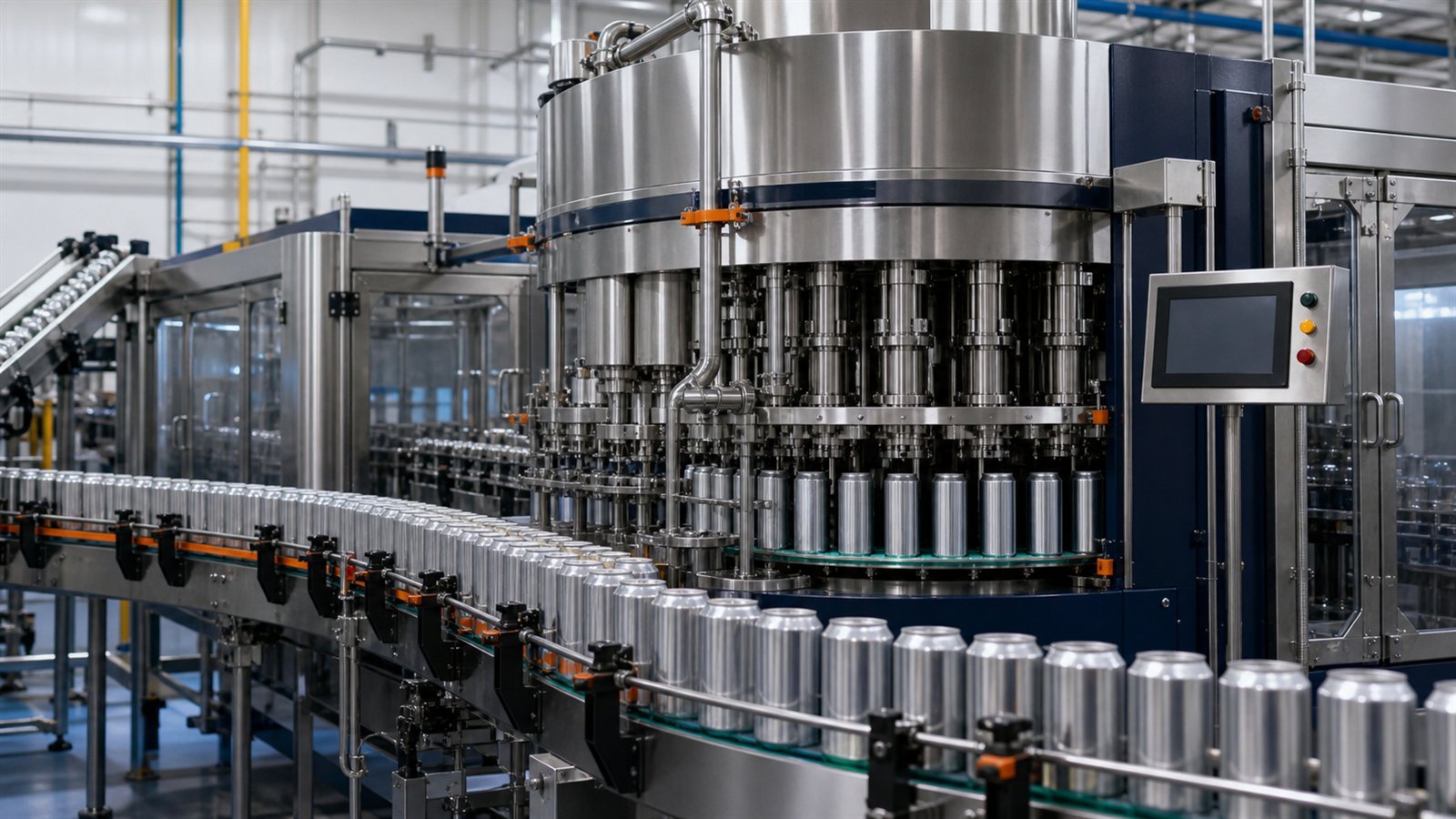
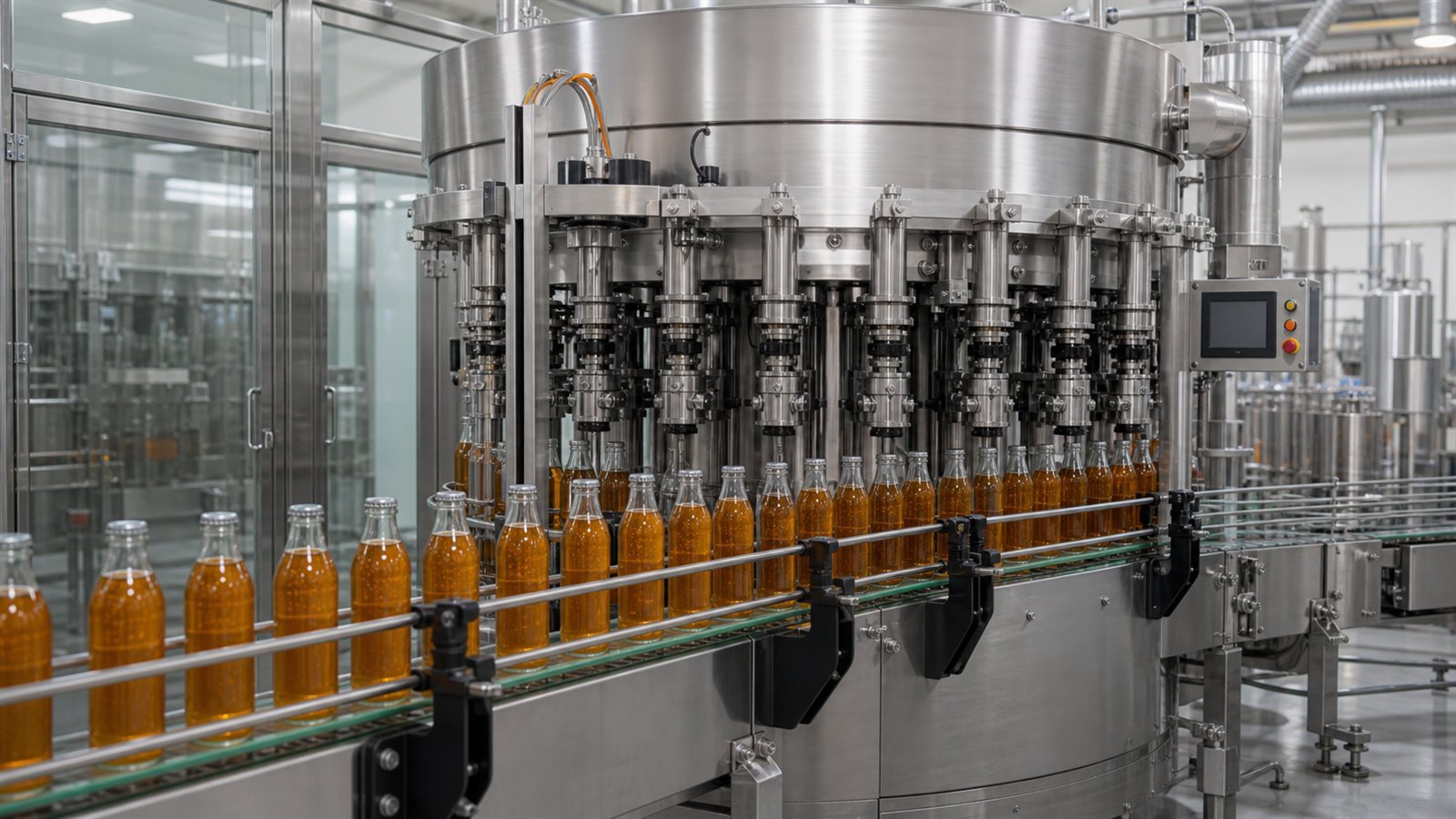
Search intent to project data
Can filling capacity bands for an initial RFQ
State output in cans per hour at an approved can size and product condition. The final packer must sustain the same saleable-output basis. Capacity examples are planning bands; the signed supplier documents and FAT protocol must define the actual guarantee.
| Capacity or scope | Typical planning context | What the RFQ should clarify |
|---|---|---|
| 2,000-6,000 CPH | Compact or diversified beverage producer | Can feeding, rinsing, filling and seaming with manual or semi-automatic secondary packing depending on SKU and labor plan. |
| 6,000-12,000 CPH | Growing regional beverage line | More automatic can handling, end feeding, seam checks, coding and synchronized shrink, tray or carton packing. |
| 12,000-24,000 CPH | Established multi-shift production | Balanced depalletizing, filling, seaming, inspection, thermal treatment where required and automatic multipacking with accumulation. |
| Above 24,000 CPH | Higher-speed dedicated line | Detailed line dynamics, product control, high-speed inspection, buffers, packer capacity and sustained efficiency require project-specific engineering. |
Buyer specification
Define the complete can-line boundary before comparing price
Use each item as a written quotation checkpoint. Ask suppliers to mark included, optional, excluded or buyer-supplied and attach the evidence that will confirm the final choice.
Empty-can supply
Choose manual feeding, pallet handling or depalletizing and protect lightweight cans from dents before filling.
Product preparation
Confirm mixing, deaeration, cooling, carbonation, buffer and cleanability around the real beverage.
Filling method
Match atmospheric, hot-fill or counter-pressure filling to the product, temperature, foam and oxygen requirement.
End feeding and seaming
Freeze the can and end specifications, tooling, seam setup, lubrication and teardown measurement method.
Inspection and thermal route
Define fill-level, seam, leak and code inspection plus warming, cooling or pasteurization where the validated process requires it.
Multipack and pallet flow
Specify tray, shrink, carton, cluster or loose-can pack pattern, pack rate, accumulation and warehouse handling.
From search to specification
A practical decision sequence for a beverage canning project
The can, end, beverage and thermal route should be frozen before the filler and seamer are treated as a priced package. Follow these steps to create comparable China supplier proposals.
- 01
Freeze the package combination
Identify the intended can body and matching end supplier, dimensions, material, coating, end type, fill volume and all planned formats. Send drawings and production samples. Tooling, end feeding, seamer setup, transfer stability and inspection criteria depend on this exact combination, so a generic can diameter is not enough for final engineering.
- 02
Define beverage conditions
State whether the product is still, carbonated, alcoholic or juice-based, plus temperature, carbonation, oxygen target, foam behavior, pulp or particles, shelf-life process and cleaning method. This information drives product preparation, filling principle, hygienic design, warming, cooling or pasteurization and the controls that belong in the quotation.
- 03
Balance the whole line
Use one CPH basis for depalletizing, rinsing, filling, seaming, inspection, coding, thermal equipment, drying and multipacking. Specify can size and saleable-output measurement point. Review accumulation and short-stop behavior because a fast filler does not create finished cases when the seamer, tunnel or packer repeatedly constrains production.
- 04
Make seam evidence contractual
Agree seam dimensions and limits from approved package data, instruments, teardown frequency, records, destructive samples and response to failed measurements. Include fill checks, end presence, code verification, reject tests and finished-pack inspection in the FAT. This turns the seamer from a quoted component into a measurable package-control process.
Direct buyer answers
Questions buyers search before requesting a quotation
These answers define the next project decision without presenting an early estimate as final engineering or a contractual guarantee.
What is included in a complete beverage can filling line?
A complete scope can include depalletizing or can feeding, rinsing, product preparation, filling, end feeding, seaming, seam and fill inspection, coding, warming or pasteurizing when required, drying, multipacking, conveying and pallet handling.
How is a can filling machine price calculated?
Price changes with product process, CPH, can and end range, filler and seamer format, depalletizing, inspection, thermal equipment, packing automation, controls, export packing and service boundary.
Can the same line fill soda, beer and still juice?
Not automatically. Carbonation, oxygen pickup, temperature, foam, hygiene and thermal-processing requirements differ. Each recipe and package route needs a documented engineering review.
Why is seam teardown important?
The double seam is a safety-critical package interface. Record agreed seam dimensions, sampling frequency, instruments and acceptance limits using the approved can and end supplier data.
Should capacity be stated in CPH or CPM?
Either can be used if the can size, product, test duration and good-output location are stated. Convert consistently and distinguish rated machine speed from sustained saleable packs.
What samples should be sent before ordering?
Provide actual cans and ends from the intended suppliers, drawings, product details, fill quantity, thermal conditions, artwork or coding position and final pack samples.
What must be checked during FAT?
Run the agreed product or approved substitute, measure fill by valve, complete seam teardowns, test alarms and rejects, verify code and inspect the finished multipack at sustained conditions.
How should two China can-line quotations be compared?
Normalize can feeding, filler, seamer, inspection, thermal route, packer, conveyors, controls, utilities, spares, documentation, testing, shipping and installation instead of comparing the filler headline alone.
Continue the decision path
Related equipment, capacity and procurement guides
Open the route that matches the real product, package, capacity or purchasing stage.