
Bottle and Container Filling Machines
Select filling equipment by PET bottle, glass bottle, can, jar, gallon bottle, small bottle or large container.
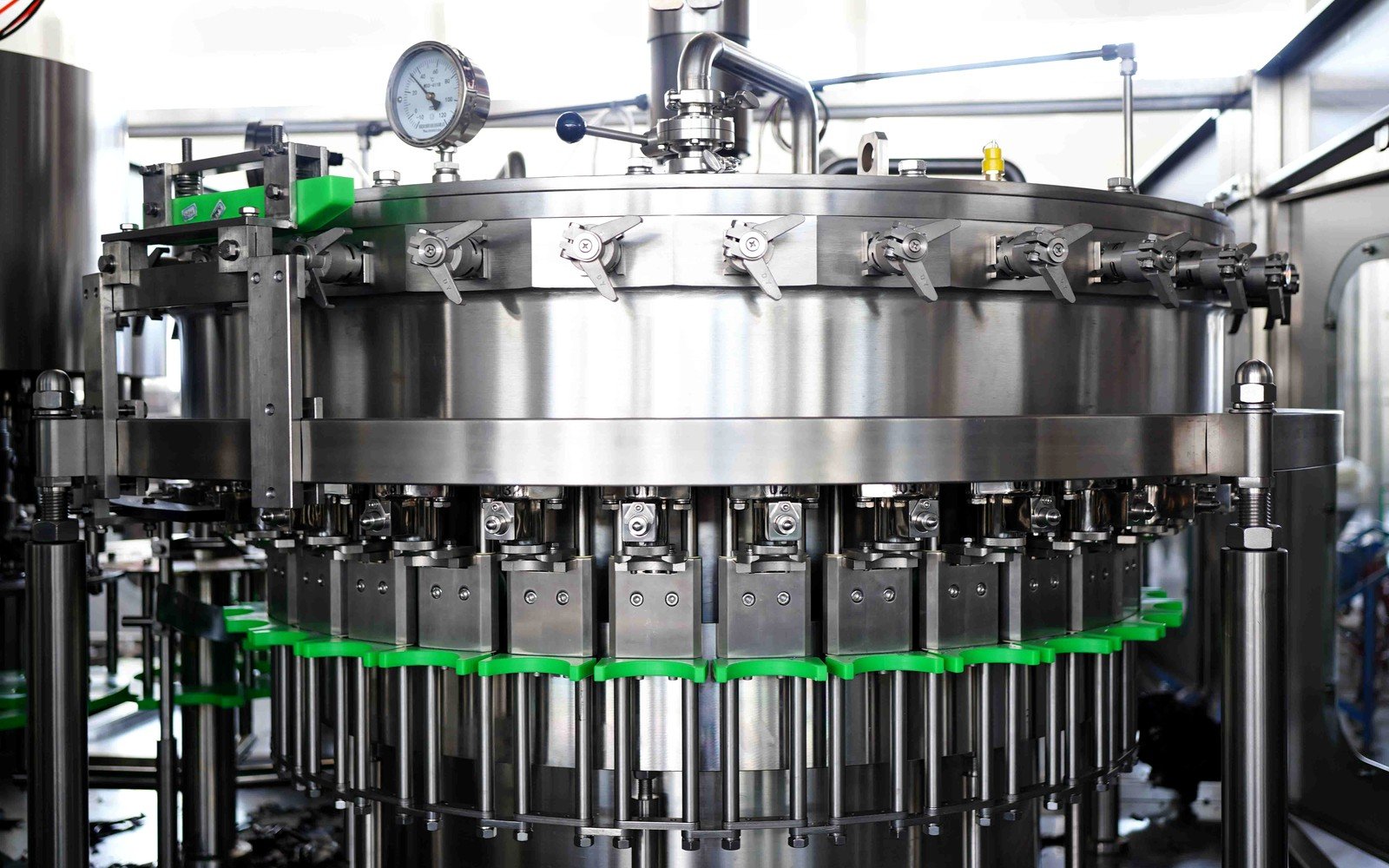
Buyer decision brief
Engineer the filling line around container and closure compatibility
The filling principle controls the liquid, while the package controls physical handling. Container material, neck finish, dimensional tolerance, rigidity, center of gravity and closure determine the infeed, guides, starwheels, filling nozzles, capper and finished-pack behavior.
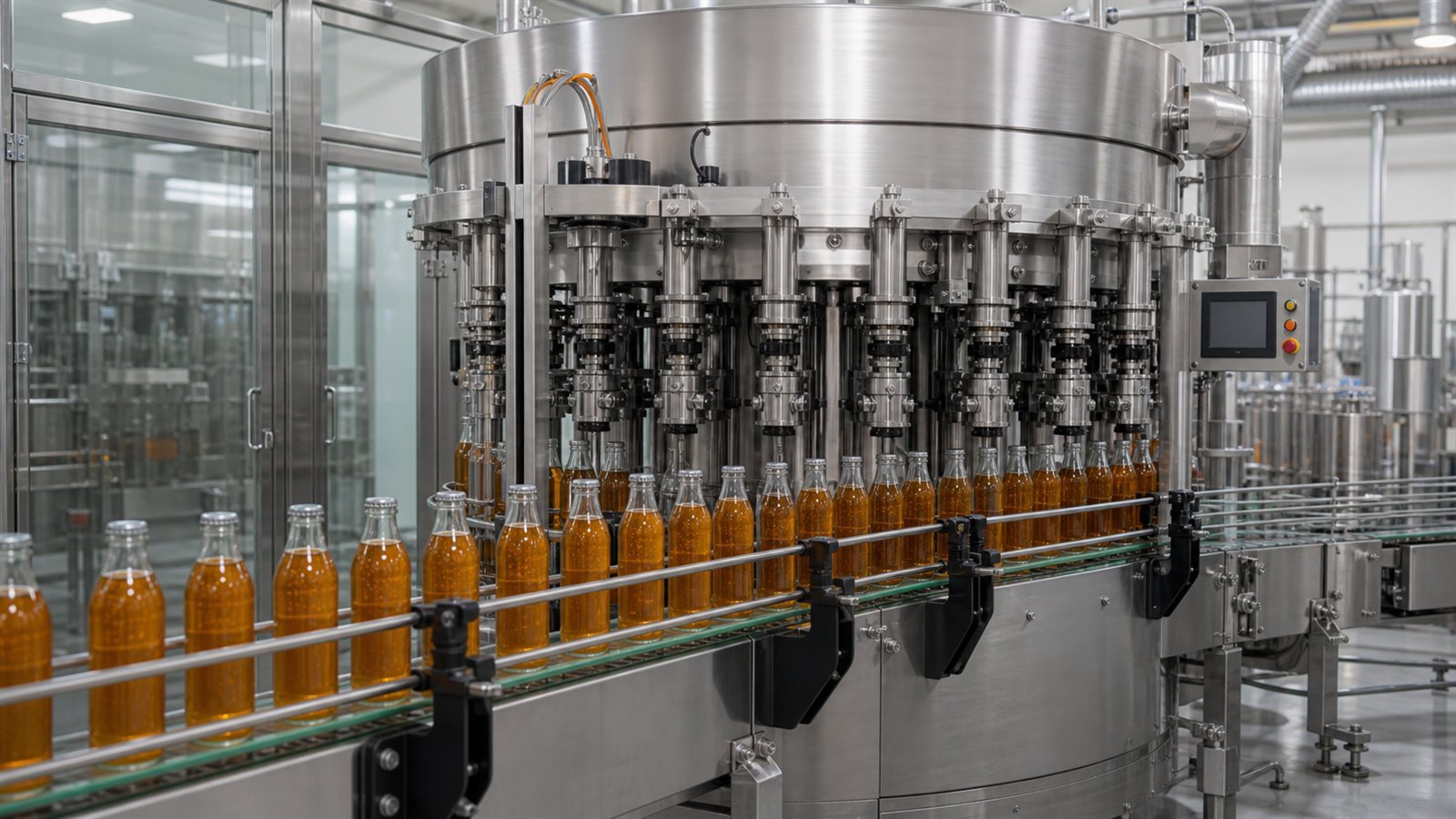
Selection matrix
Decisions to resolve before supplier comparison
| Decision area | Define in the RFQ | Why it changes the equipment |
|---|---|---|
| PET bottle | Lightweight, neck finish, pressure or heat rating and wall stiffness. | Confirm empty-bottle transport, deformation, neck handling, cap torque and filled stability. |
| Glass bottle | Rigid and heavy with dimensional variation and breakage risk. | Plan bottle inspection, controlled transfer, filling clearance and breakage cleanup. |
| Aluminum can | Open container requiring controlled feeding, filling and end seaming. | Treat the can, end and seamer as one system with documented seam teardown. |
| Jar or wide-mouth pack | Large opening often paired with viscous products or particles. | Match nozzle diameter, indexing, headspace, cap application and container cleaning. |
| Large bottle or gallon | Higher filled weight, handles and longer dose time. | Size conveyors, supports, washer stages, cap handling and leak inspection for the real load. |
Quotation inputs
Information to send
- Dimensioned container and closure drawings with tolerances.
- Production-intent samples from the planned package supplier.
- Container material, weight, pressure and temperature limits.
- Neck finish, closure liner, torque, crimp or seam requirements.
- Label panel, orientation feature and finished-pack configuration.
- Complete format range and expected changeover frequency.
Acceptance evidence
What to verify
- Run the smallest, largest and least stable agreed package formats.
- Test dimensional variation rather than only approved display samples.
- Inspect scuffing, tipping, deformation, chips, dents and transfer marks.
- Measure closure torque, leak, seam or seal against written limits.
- List every change part, setting, tool and format-specific recipe.
Buyer questions
Questions to settle before an order
Why are bottle drawings needed before quotation?
A photograph does not define neck dimensions, tolerances, handling points or closure fit. Drawings and samples let the supplier design guides, starwheels, nozzles, capper parts and label position around measurable geometry.
Can PET and glass bottles run on the same line?
Some equipment can be designed for both, but handling, rinsing, filling, breakage protection, closures and change parts differ. The commercial value depends on the real format mix and changeover requirement.
What should be checked for a can filling line?
Confirm the exact can and end specification, product carbonation or oxygen limits, fill temperature, seamer tooling, seam teardown standard, reject tracking and secondary-pack format.
How are package changeovers accepted?
Time the complete procedure from the last good unit of one format to stable approved output of the next. Include mechanical parts, guides, recipes, cap feed, labels, packer settings and quality release.
Container and bottle filling answers
Plan a bottle, can, jar or gallon filling line around the complete package range
Package compatibility reaches far beyond bottle height. Material, neck finish, dimensional tolerance, rigidity, pressure or heat resistance, closure, label panel and finished weight affect every transfer from infeed through filling, capping, inspection and packing. Give suppliers drawings and production samples for all important formats, then verify the least stable package during acceptance.
Selection sequence
Resolve package compatibility before final machine configuration
The same liquid can need a different line when the container or closure changes. Use these steps before approving general arrangement drawings.
Control the package specification
Freeze dimensioned container and closure drawings, tolerances, material, weight, supplier and revision. Track later package changes through formal approval.
Map every handling point
Identify the base, body and neck surfaces used by unscramblers, conveyors, guides, starwheels, rinsers, fillers, cappers and labelers.
Test filled-package stability
Calculate filled weight and center of gravity. Check tipping, deformation, scuffing, breakage, handle orientation and accumulation under normal line pressure.
Define closure acceptance
Set cap torque, leak, vacuum, crimp or seam criteria with the correct closure and liner. Include feeding, application, inspection and reject handling.
Approve the changeover system
List all format parts, tools, recipes and settings. Time the complete change from last good container to stable approved output on the next format.
Direct buyer answers
Container filling questions for PET, glass, cans, jars and gallon bottles
Each answer identifies the decision, the evidence to request and the condition that should be tested before purchase.
Can one filling line handle PET bottles, glass bottles and cans?
A common line is not automatically practical. PET and glass may sometimes share selected conveyors or filler platforms when handling and closures are engineered for both, but glass needs breakage control and PET can deform under heat or pressure. Open cans require can feeding, controlled filling, end handling and a seamer rather than a bottle capper. Compare shared equipment, dedicated modules, change time and output loss before selecting a multi-format concept.
Why does a supplier need bottle and cap drawings?
Photographs do not define the neck finish, thread, sealing surface, tolerance, handling diameter or closure liner. Drawings let engineers design nozzles, guides, starwheels, cap chucks and label positions around measurable geometry. Submit production samples as well because actual molding variation, ovality, flash, stiffness and surface finish can differ from the nominal drawing.
Can one machine fill different bottle volumes?
It can often be designed for an agreed volume range, but the smallest and largest package may need different guides, starwheels, nozzles, height settings, recipes and cap-handling parts. A much larger dose also changes cycle time. Ask for an itemized format-parts list and output by bottle size. During FAT, run both range extremes and time the full changeover.
How are lightweight PET bottles handled without tipping or crushing?
Use stable neck or body handling, correctly set side guides, smooth acceleration, controlled accumulation pressure and transfers without excessive gaps. Air conveyors may support empty PET bottles by the neck, while filled bottles need base support. Confirm bottle top load, wall distribution and base design with the package supplier, then test warm, wet or carbonated conditions where they apply.
What must be checked on a glass bottle filling line?
Check dimensional variation, chips, residual contamination, bottle inspection, controlled transfers, filling-valve clearance and breakage containment. Filled glass bottles are heavy, so conveyors and packers need suitable loads. FAT should include representative production bottles rather than only selected perfect samples, plus an agreed response to breakage and a closure leak or torque test.
What makes a can filling and seaming line different?
The open can and matching end are controlled as a system. Product temperature, carbonation or oxygen management, foam, fill level, lid feed, seamer tooling and seam integrity all interact. Define the exact can and end supplier specification. Require seam teardown measurements, reject challenges, cleaning access and traceable records; visual inspection alone cannot confirm an acceptable double seam.
How should jars and wide-mouth containers be filled?
Wide openings permit larger nozzles and may suit viscous products or particles, but jar indexing, headspace, strings, drips and closure cleanliness become important. Provide particle size, fill temperature, jar drawing and cap or seal details. Test whether product reaches the sealing surface, whether threads remain clean and whether the capper applies a repeatable closure without tipping the jar.
What is different about 3 to 5 gallon bottle filling?
Large returnable or one-way bottles have greater weight and longer wash or fill cycles. The line may need multi-stage washing, bottle-return inspection, handle-aware conveying, dedicated cap feeding and leak checks. Specify bottle condition, return cycle, washing chemistry, required output and filled-container handling. Do not extrapolate small-bottle speed or conveyor design to gallon formats.
How should cap torque, leaks or can seams be accepted?
Write the measurement device, sampling frequency and limits before FAT. Screw caps may need application and removal torque checks plus leak testing. Press-on, crown, ROPP or other closures need their own dimensional and seal criteria. Can ends require a documented seam teardown method. Challenge missing or misapplied closure detection and verify that rejects are separated and counted.
What package samples are needed before manufacturing starts?
Provide approved drawings and enough production-intent containers, closures, labels and secondary packaging for design confirmation, adjustment, changeover and FAT. Include known tolerance variation rather than only showroom samples. Keep a signed reference set and record the package revision. If the container changes after machine manufacture begins, assess guides, tooling, output and schedule before approving the change.
Buyer inputs
Send a controlled package data set
- Container drawings, tolerances, material and revision.
- Production-intent samples showing normal variation.
- Closure drawing, liner, supplier and application limits.
- Fill product, temperature, pressure and filled weight.
- Every bottle, jar, can or gallon format in scope.
- Label panel, orientation feature and finished pack.
- Changeover frequency and required output by format.
Supplier evidence
Require package-interface evidence
- Handling-point and container-flow explanation.
- Format-specific parts and settings schedule.
- Closure application and inspection method.
- Output calculation for the least favorable format.
- Controlled package reference and change process.
- FAT checks for stability, damage, leak and changeover.
- Drawings, recipes, tools and spare-format parts.
How Allot works
Keep package details visible across the China supply chain
Allot Tech organizes package drawings, sample revisions and acceptance questions so international buyers and Chinese equipment partners work from the same reference. Founded in 2019, the company brings a communication and online-marketing background to manufacturing sourcing from 2025 onward. That history is stated openly; package fit must still be demonstrated with drawings, samples and test records.
Continue your research
Related filling and packaging decision guides
Follow the route closest to your liquid, package, process or purchasing stage.
Check the container, neck and closure as one system
Container material affects handling, filling temperature, pressure, rinsing and change parts. Send drawings or clear samples whenever possible, especially when one line must run several bottle formats.
| Container | Common applications | Compatibility checks |
|---|---|---|
| PET bottle | Water, juice, tea, CSD, oil and household liquids | Neck finish, panel strength, hot-fill suitability, base design and air-conveyor handling |
| Glass bottle | Juice, tea, carbonated drinks, sauces and premium products | Weight, diameter variation, breakage protection, crown/screw cap and temperature change |
| Aluminum can | Carbonated drinks, beer and non-carbonated beverages | Can size, lid specification, seaming requirement and product pressure |
| Jar or wide-mouth container | Sauce, paste, jam, honey and particulate food | Opening diameter, product particles, nozzle access and cap application |
| 3-5 gallon bottle | Returnable or single-use drinking water packaging | Bottle condition, washing stages, cap type, handle and leak inspection |