
Water treatment system for bottled water and beverage factories, including filtration, reverse osmosis, sterilization, storage and CIP support from China.
Water Treatment System
Water treatment system for bottled water and beverage production, including filtration, reverse osmosis and sterilization equipment.
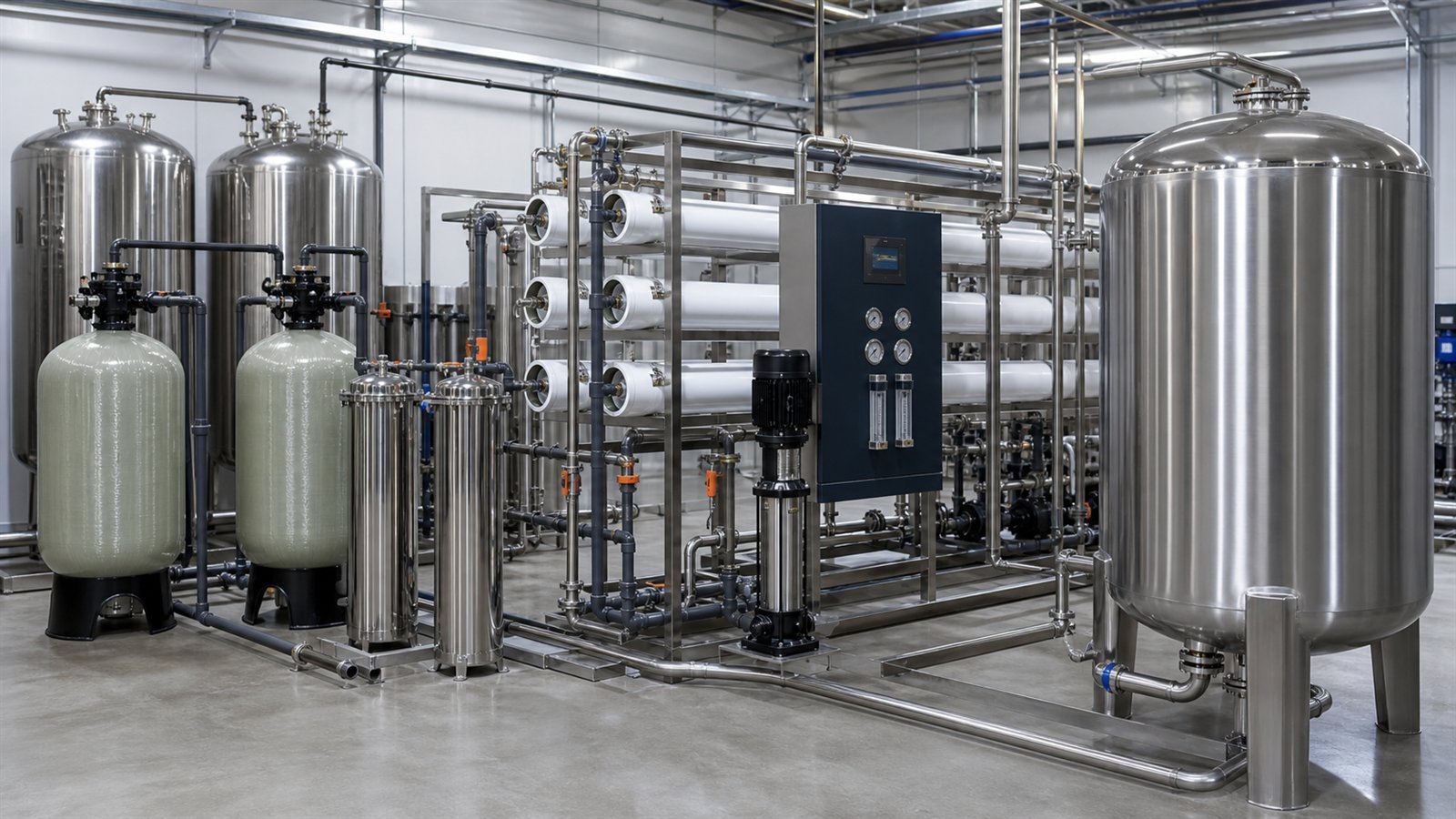
Clean Water Preparation for Filling Lines
Water treatment is the foundation of bottled water and beverage projects. The system can include filtration, reverse osmosis, UV or ozone sterilization.
Main Features
Source-Based Design
Configuration depends on raw water quality.
RO and Filtration
Options include pre-treatment, RO, UV and ozone.
Line Matching
Designed to supply stable water flow for filling.
Typical Line Configuration
| Application | Bottled water and beverage production |
|---|---|
| Containers | Process system before filling |
| Capacity | Matched to filling output |
| Optional Equipment | Filters, RO, UV, ozone, CIP, tanks |
What We Need to Quote
- Product type, bottle or container size, cap type and packaging format.
- Target output per hour and working shifts per day.
- Factory layout, voltage, compressed air and water source conditions.
- Whether you need a single machine or a complete turnkey beverage production line.
Need a water treatment system?
Contact Allot Tech at sales@allottech.com, +1 818 262 0958 or +86 186 6213 1120 for a practical machine recommendation.
Practical Notes for Water Treatment System Buyers
When comparing water treatment system suppliers in China, the most reliable quotation starts from real production conditions, not only a machine name. Allot Tech checks product characteristics, package format, output target, utilities, layout and export requirements before recommending a beverage machinery solution.
Best-fit applications
This page is most relevant for bottled water and beverage pre-treatment rooms. We can help compare machine configuration, matching upstream and downstream equipment, and the practical space needed for installation.
How we match equipment
We review raw water report, required TDS, filtration stages and sterilization method. This helps avoid under-sized machines, unnecessary automation, missing conveyors, weak packaging plans or shipment problems after the order is placed.
Quote checklist
- Product and bottle or package size
- Target capacity per hour or per day
- Cap, label and packing style
- Factory layout, voltage and destination country
Common Questions About Water Treatment System
How do I choose the right water treatment system?
Start with the product, container size, target capacity, available utilities and factory space. Allot Tech uses these details to match the filling, packing and auxiliary equipment instead of recommending a machine only by price.
Can this water treatment system be shipped worldwide from China?
Yes. We can coordinate packing, export documents and international shipment from China. Buyers can contact sales@allottech.com with destination country and project requirements.
What information is needed for a quotation?
Please send product type, bottle or container drawings, output target, cap or label style, factory layout if available and any preferred automation level.
Technical decision paths
Research this equipment before quotation
Use the focused guides to define configuration, commercial assumptions and measurable acceptance conditions.
Bottling water treatment answers
Design a bottling water treatment system from raw-water analysis and finished-water targets
Do not copy another factory flow diagram. Test the source water, define the required process or product-water specification and calculate hourly plus daily demand. Pretreatment, membrane separation, disinfection, storage and hygienic distribution should each solve a documented condition. The final design must also cover cleaning water, recovery, reject handling, monitoring and the interface to beverage preparation or filling.
Selection sequence
Use evidence to configure the water treatment train
Source conditions and product requirements can vary by season and location. These steps create a design basis that suppliers can explain and verify.
Obtain representative laboratory data
Test relevant physical, chemical and microbiological parameters through a qualified local laboratory. Consider seasonal or source changes instead of relying on one old report.
Define every water demand
Calculate product, ingredient, bottle rinsing, CIP, backwash, sanitation and utility demand by hour and day. Include peak use and storage strategy.
Assign a purpose to each stage
Link multimedia filtration, carbon, softening or dosing, cartridge filtration, RO or other membranes, UV, ozone, tanks and piping to a stated control objective.
Plan hygienic storage and distribution
Control tank design, vents, recirculation, dead legs, materials, drainability, sampling and sanitation after the final treatment barrier.
Set monitoring and acceptance points
Define flow, pressure, conductivity or TDS, disinfectant condition, microbiological sampling and any product-specific limits with qualified local specialists.
Direct buyer answers
Water treatment system questions from bottled water and beverage plants
Each answer identifies the decision, the evidence to request and the condition that should be tested before purchase.
What water test is needed before choosing a bottling treatment system?
Begin with a representative raw-water laboratory report and the applicable finished-water or beverage specification. Relevant parameters may include turbidity, hardness, alkalinity, conductivity or dissolved solids, iron, manganese, silica, chloride, organic load and microbiology, depending on the source and process. A qualified local water specialist should define the panel. Record source type, seasonal variation, temperature and flow because one incomplete sample can produce the wrong pretreatment or membrane design.
Does every bottled water plant need reverse osmosis?
No. RO is useful when dissolved salts or specific contaminants must be reduced, but it also creates concentrate, consumes pumping energy and may change mineral composition and taste. A source that already meets the intended product and legal requirements may need a different treatment train. Choose RO from laboratory data, product targets, recovery analysis and qualified local review rather than using it as an automatic symbol of water quality.
How is water treatment capacity matched to the filling line?
Calculate all treated-water consumers, not only the liters sold in bottles. Include filler demand, product preparation, rinsing, CIP, sanitation, filter backwash, membrane flushing and peak simultaneous use. Then define operating hours, storage buffer and realistic recovery. The supplier should provide a mass balance showing feed water, treated water, reject or backwash streams and the conditions used for the calculation.
What pretreatment is needed before RO membranes?
Pretreatment depends on suspended solids, turbidity, hardness, chlorine, organics, iron, manganese, silica, microbiology and membrane limits. A system may use multimedia filtration, activated carbon, softening or chemical dosing, cartridge filtration and controlled dechlorination, but stages should not be copied blindly. Ask the designer to link each stage to laboratory data, define loading and backwash, and protect the selected membrane under the expected feed-water range.
What is the difference between UV and ozone in a bottling plant?
UV treats water as it passes through a correctly sized and maintained reactor but does not provide a lasting disinfectant residual in downstream tanks or piping. Ozone can support oxidation and distribution sanitation when generation, mixing, contact, off-gas and residual control are properly designed. They are not interchangeable decorations. Selection and operating limits should follow the water, process, materials, worker safety and destination requirements.
How should treated-water tanks and piping be designed?
After final treatment, poor storage or distribution can reintroduce contamination. Review closed hygienic tanks, protected vents, suitable materials, cleanable surfaces, drainage, recirculation, sampling points and avoidance of stagnant branches. Define sanitation and monitoring. Final hygienic design and microbiological controls should be reviewed against local food and water rules by qualified specialists.
What is RO recovery and why does it matter?
Recovery is the proportion of feed water converted to permeate under defined conditions. Higher recovery can reduce reject volume but may increase concentration and scaling risk. It depends on raw-water chemistry, temperature, membrane design and pretreatment. Require a design mass balance, antiscalant or softening rationale, concentrate disposal plan and operating range. Do not compare recovery percentages without the same feed-water basis.
How are RO membranes cleaned and protected?
Protection starts with correct pretreatment, operating pressure, crossflow, recovery, dechlorination where required and routine monitoring. A clean-in-place approach may be needed when normalized flow, pressure or rejection indicates fouling. Ask for membrane limits, preservation, flushing, cleaning triggers, chemicals, disposal and restart checks. Operators should follow the membrane supplier and site safety requirements rather than improvising chemical cleaning.
How does water treatment connect to a filling or CIP system?
Define treated-water quality, pressure, temperature and flow at every handoff. Product water, final rinse water and CIP make-up may have different demand profiles or monitoring needs. Coordinate storage volume, pumps, recirculation, sanitization and line startup. The layout should show battery limits and valve responsibilities so neither the treatment supplier nor filler supplier assumes the other provides a critical tank or pump.
What information is needed for a water treatment quotation?
Send the full laboratory report, source and seasonal data, finished-water target, hourly and daily demand, operating schedule, recovery or discharge constraints, available utilities, site climate, building dimensions and destination. Identify product, rinse and cleaning uses. Require a process flow, mass balance, equipment schedule, consumables, monitoring points, operating cost assumptions, installation scope and performance acceptance conditions in return.
Buyer inputs
Send a defensible water-treatment design basis
- Recent qualified raw-water laboratory report.
- Source type, temperature and seasonal variation.
- Finished-water and product requirements.
- Hourly, daily and peak water demand by use.
- Operating schedule, storage and recovery expectations.
- Reject, backwash and wastewater constraints.
- Utilities, site conditions, layout and destination.
Supplier evidence
Require a traceable process proposal
- Process rationale tied to the laboratory data.
- Feed, product, reject and backwash mass balance.
- Equipment, media, membrane and instrument schedule.
- Monitoring, alarm, sampling and sanitation plan.
- Utility, chemical, consumable and operating assumptions.
- Layout, piping boundary and installation responsibility.
- Performance test, manuals, spares and training scope.
How Allot works
Coordinate water-treatment evidence before China sourcing
Allot Tech can organize the laboratory inputs, demand balance and supplier response needed for a comparable Chinese water-treatment proposal. We were founded in 2019 and began combining our digital communication background with manufacturing sourcing and export work in 2025. We do not replace laboratory testing, process validation or local regulatory review; those remain essential project evidence.
Continue your research
Related filling and packaging decision guides
Follow the route closest to your liquid, package, process or purchasing stage.
Water quality by design
Select each treatment stage from measured source-water conditions
A copied RO flow diagram can over-treat or under-treat water. Start from laboratory data, production demand and the finished-water specification.
| Project area | Buyer input to confirm | Engineering output |
|---|---|---|
| Raw-water evidence | TDS, hardness, turbidity, iron, manganese and microbiology | Design basis and seasonal variation to review |
| Treatment objective | Purified water, beverage process water or protected mineral profile | Stage selection and recovery target |
| Hygienic delivery | Peak filler demand, storage, recirculation and sanitation | Tank, pump, UV or ozone and stainless pipework scope |
What the recommendation should define
A treatment mass balance, component schedule, utility requirement and sampling plan connected to the filling-line demand.