
Capacity Planning Guide
5,000 BPH PET Bottled Water Filling Line - Capacity Planning Guide
Plan a 5,000 BPH PET Bottled Water Filling Line project around the real product, package, shifts, efficiency, utilities and acceptance test instead of choosing a machine from nameplate speed alone.
Technical planning content reviewed August 29, 2026Editorial basis
Planning guidance, not a final machine specification
Published by Allot Tech (Suzhou) Co., Ltd. This multilingual library uses a consistent buyer-decision framework and independently prepared language packs. Confirm the final configuration against supplier drawings, actual product and packaging samples, destination requirements and the signed technical agreement.
Project decision basis
Planning snapshot
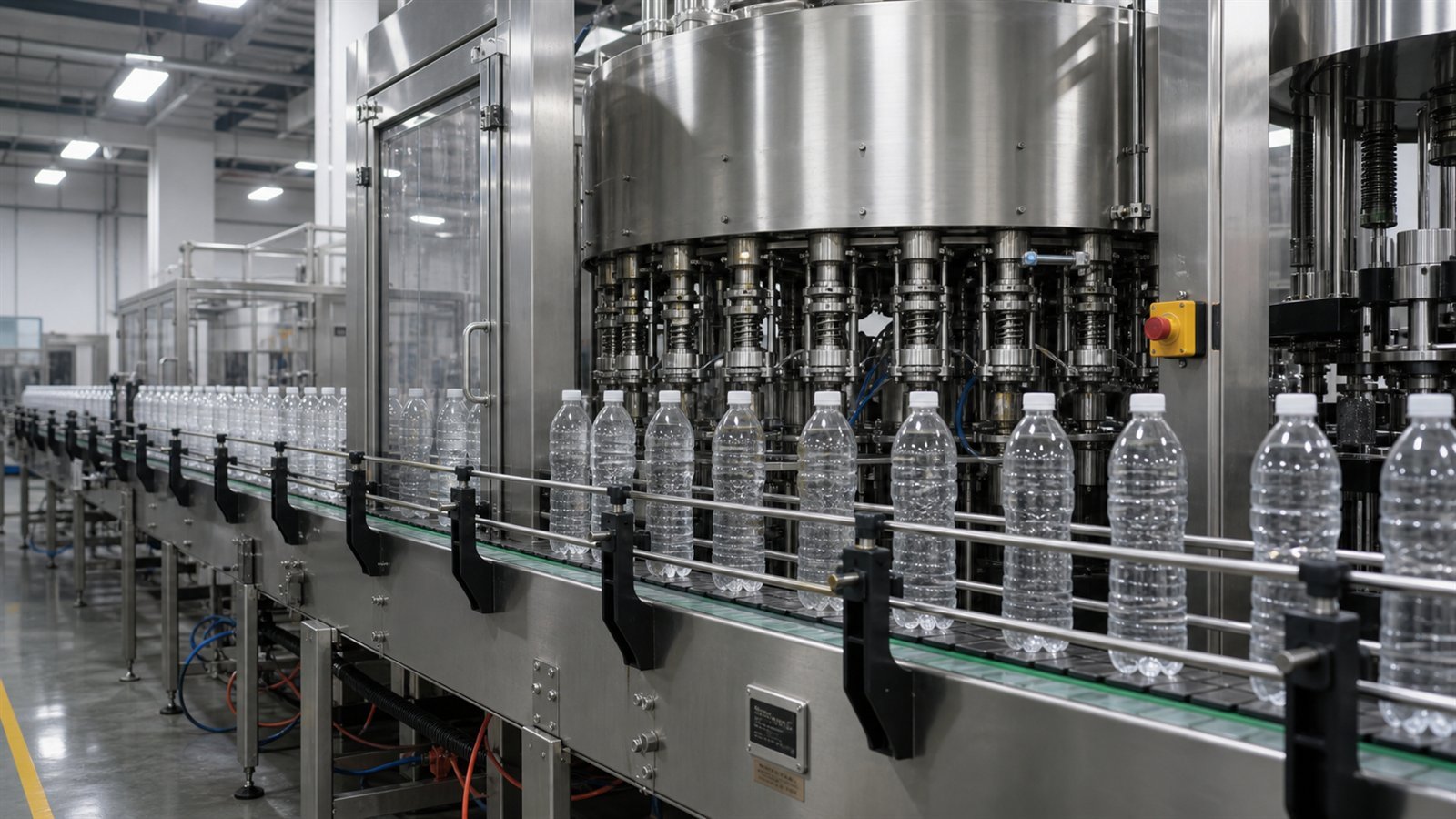
Raw-water treatment, treated-water storage, PET bottle blowing or feeding, rinsing, filling, capping, coding, labeling, packing and conveying must be balanced as one production system.
- Rated capacity
- 5,000 BPH
- Reference basis
- 500 mL PET bottle, still water and an agreed continuous test window
- Complete line boundary
- Raw-water treatment, treated-water storage, PET bottle blowing or feeding, rinsing, filling, capping, coding, labeling, packing and conveying must be balanced as one production system.
BPH / CPH PLANNING BASIS
Output by shift and planning efficiency
The figures below are planning estimates, not guaranteed production. Deduct sanitation, changeovers and planned stops before applying the efficiency assumption.
| Scheduled hours | Planning efficiency | Estimated saleable containers |
|---|---|---|
| 8 | 70% | 28,000 |
| 8 | 80% | 32,000 |
| 16 | 70% | 56,000 |
| 16 | 80% | 64,000 |
| 20 | 80% | 80,000 |
| 20 | 85% | 85,000 |
CAPACITY WORKSHEET
Required capacity worksheet
A budget quote becomes technically useful only after the liquid, container, closure, output basis, line scope, site conditions and destination are confirmed.
Send these project inputs
- Product name, formula behavior, temperature and cleaning requirement
- Container material, volume, dimensions, drawing and representative samples
- Closure or seam specification, feed orientation and representative samples
- Saleable output by SKU, shifts, campaign length and expansion plan
- Label, code, multipack, case and pallet requirements
- Building dimensions, voltage, water, air, steam, cooling and drainage
- Destination, trade terms, installation boundary and requested schedule
From requirement to acceptance
- 01Approve product and package basis
- 02Freeze process flow, line boundary and layout
- 03Normalize quotations and acceptance criteria
- 04Track manufacture, FAT, shipment, SAT and support close-out
RFQ · FAT · SAT · TCO
A five-part specification record for this project
Use these decision gates to turn search research into a comparable RFQ, test plan and delivery boundary.
Freeze the product and package samples before final machine selection.
Separate rated speed from sustained saleable output by SKU and shift.
Confirm utilities, layout, drainage, access and operator responsibilities.
Write measurable FAT and SAT criteria into the commercial agreement.
Compare total installed scope, spares, shipping and support instead of headline machine price.
BUYER QUESTIONS
Capacity planning questions
Does the stated hourly capacity equal daily saleable output?
No. Daily output depends on scheduled hours, sanitation, format changes, short stops, rejects and the sustained efficiency achieved by the integrated line.
Can a complete line be quoted from capacity alone?
No. The supplier also needs the product, package, closure, process, utilities, packing format, destination and acceptance basis.
How should capacity be proven before shipment?
Agree a FAT protocol that states the product or approved substitute, package samples, test duration, speed basis, quality checks, instruments and pass criteria.
One-Stop Beverage Equipment Solutions
A budget quote becomes technically useful only after the liquid, container, closure, output basis, line scope, site conditions and destination are confirmed.