
Bottled water filling line from Allot Tech for purified water, mineral water and drinking water production, including rinsing, filling, capping, labeling and packing equipment from China.
Bottled Water Filling Line
Automatic bottled water filling line for mineral water, purified water and drinking water production, covering rinsing, filling, capping, conveying, labeling and packing.
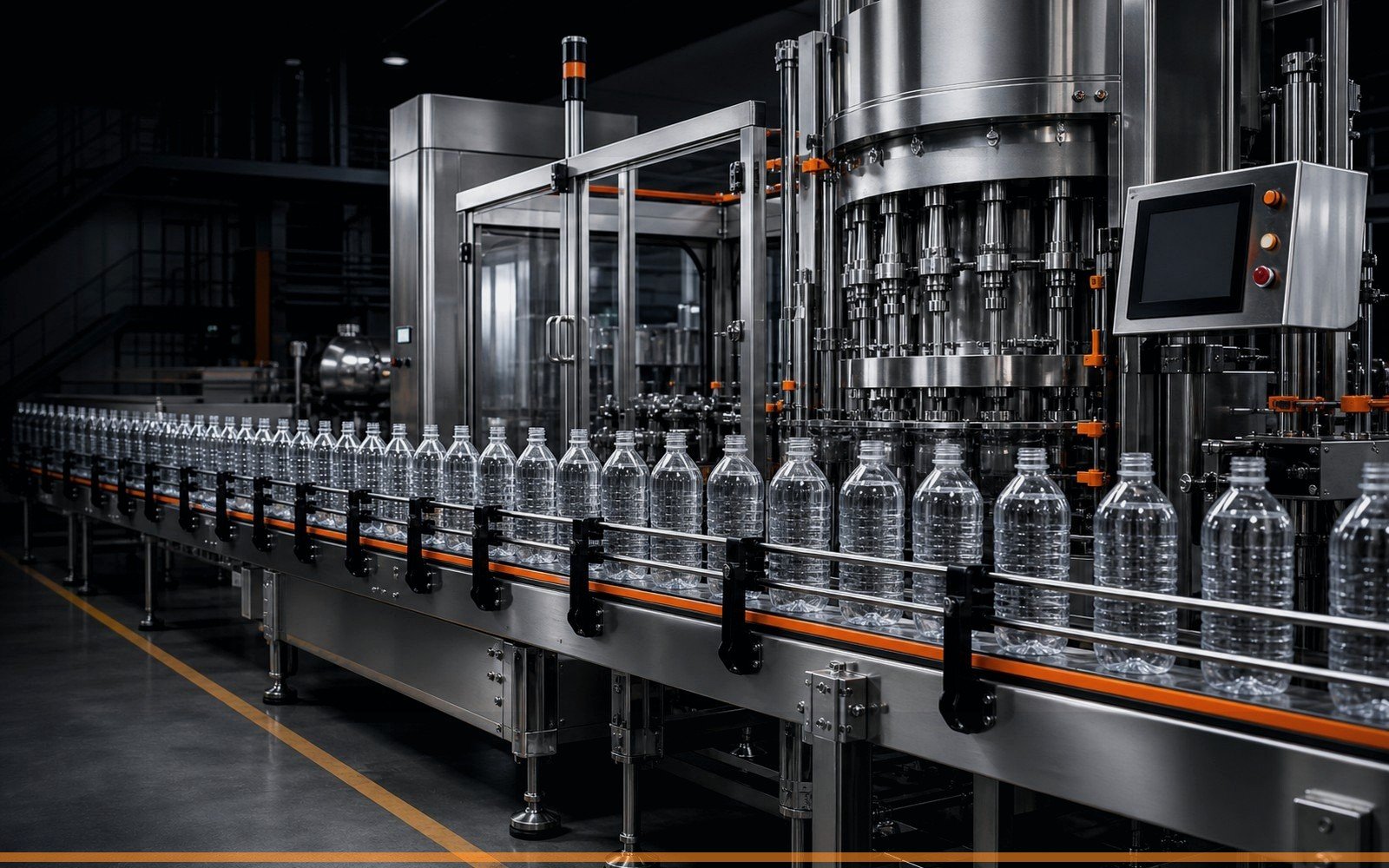
Reliable PET Bottle Water Filling Solution
The bottled water filling line is designed for PET bottle drinking water factories that need stable output, hygienic operation and easy maintenance. Allot Tech helps buyers configure the complete line from water treatment and bottle blowing to water filling, labeling and shrink wrapping.
Main Features
Rinsing Filling Capping
Integrated water filling monoblock reduces bottle transfer steps and improves line stability.
Complete Line Matching
Can connect water treatment, bottle blowing, air conveyor, labeling, coding and packing equipment.
Flexible Capacity
Suitable for small, medium and large bottled water plants.
Typical Line Configuration
| Application | Mineral water, purified water, spring water and drinking water production |
|---|---|
| Containers | PET bottles with screw caps |
| Capacity | Entry level to high-speed line |
| Optional Equipment | Water treatment, bottle blowing, labeling, coding, shrink wrapping, carton packing |
What We Need to Quote
- Product type, bottle or container size, cap type and packaging format.
- Target output per hour and working shifts per day.
- Factory layout, voltage, compressed air and water source conditions.
- Whether you need a single machine or a complete turnkey beverage production line.
Need a bottled water filling line?
Contact Allot Tech at sales@allottech.com, +1 818 262 0958 or +86 186 6213 1120 for a practical machine recommendation.
Practical Notes for Bottled Water Filling Line Buyers
When comparing bottled water filling line suppliers in China, the most reliable quotation starts from real production conditions, not only a machine name. Allot Tech checks product characteristics, package format, output target, utilities, layout and export requirements before recommending a beverage machinery solution.
Best-fit applications
This page is most relevant for purified water, mineral water and drinking water factories. We can help compare machine configuration, matching upstream and downstream equipment, and the practical space needed for installation.
How we match equipment
We review water source, bottle volume, target bottles per hour and cap type. This helps avoid under-sized machines, unnecessary automation, missing conveyors, weak packaging plans or shipment problems after the order is placed.
Quote checklist
- Product and bottle or package size
- Target capacity per hour or per day
- Cap, label and packing style
- Factory layout, voltage and destination country
Common Questions About Bottled Water Filling Line
How do I choose the right bottled water filling line?
Start with the product, container size, target capacity, available utilities and factory space. Allot Tech uses these details to match the filling, packing and auxiliary equipment instead of recommending a machine only by price.
Can this bottled water filling line be shipped worldwide from China?
Yes. We can coordinate packing, export documents and international shipment from China. Buyers can contact sales@allottech.com with destination country and project requirements.
What information is needed for a quotation?
Please send product type, bottle or container drawings, output target, cap or label style, factory layout if available and any preferred automation level.
Bottled water filling line planning by capacity and bottle format
Bottled water buyers often search for complete PET water filling lines, mineral water machinery, purified water treatment, bottle blowing, labeling and shrink packing. A practical quotation should connect every section of the line, not only the rinser-filler-capper.
Quotation details buyers should prepare
- Water source and water treatment process: sand filter, carbon filter, RO, UV, ozone and storage tanks.
- Bottle volume, PET preform neck, cap size, label type and packing format.
- Target capacity such as small line, medium line or high-speed BPH requirement for 500ml bottles.
- Whether bottle blowing, air conveyor, labeling, shrink wrapping and palletizing should be included.
Plan filtration and RO before filling.
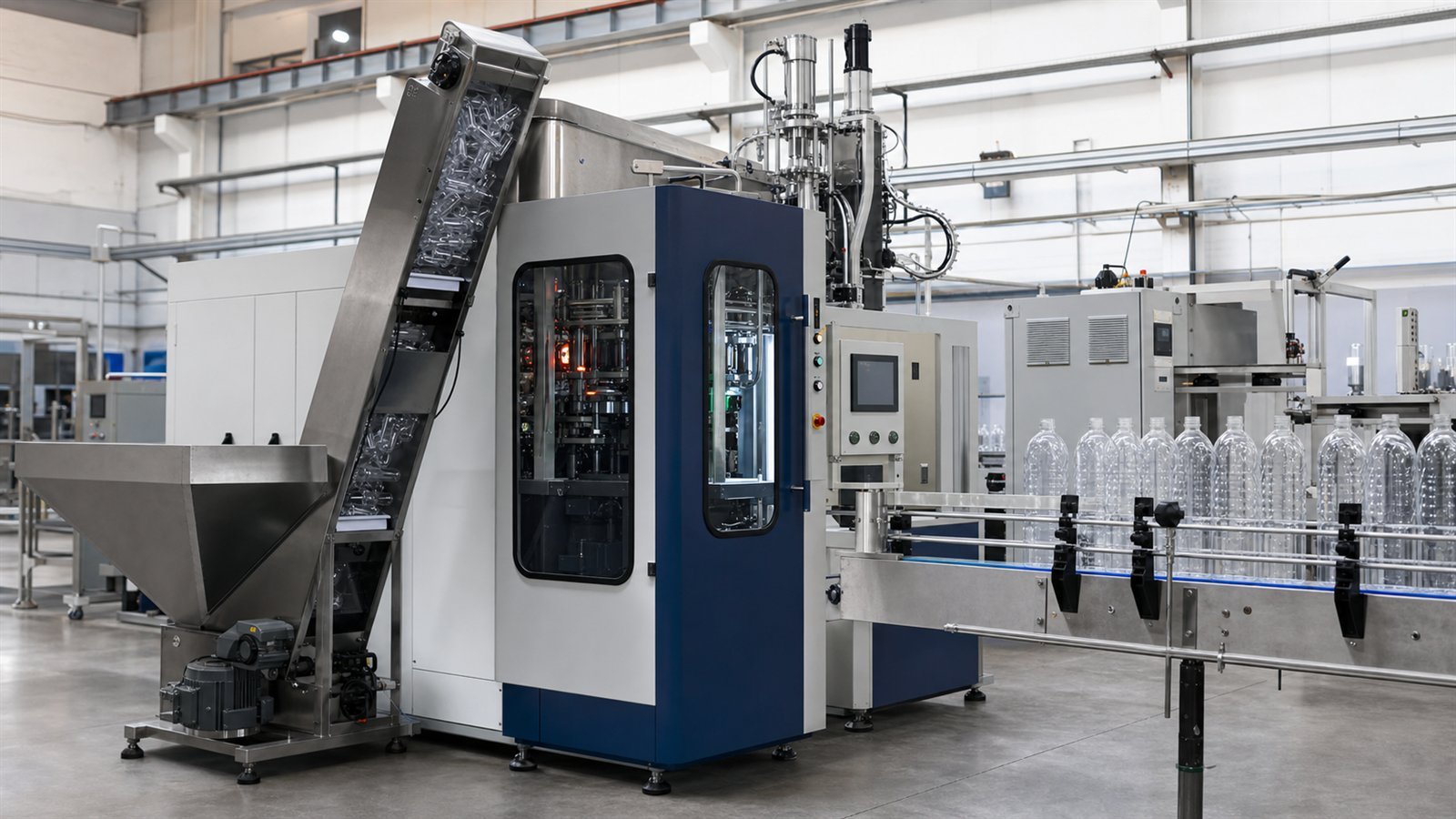
PET bottle blowing machineMatch bottle supply with line capacity.
Shrink wrapping machinePrepare bottles for shipment and storage.
FAQ
What is included in a bottled water filling line?
A complete line can include water treatment, PET bottle blowing, air conveyor, rinsing filling capping machine, labeling, coding, packing, conveyors and optional palletizing.
How do I choose bottled water line capacity?
Confirm bottle size, target bottles per hour, working hours, water treatment output, budget and factory space. The filling machine and downstream packing must be matched together.
Bottled water line buyer answer
What should a complete bottled water filling line include?
A complete bottled water filling line can connect raw-water treatment, hygienic storage, PET bottle blowing or empty-bottle supply, rinsing, gravity filling, capping, coding, labeling, inspection, secondary packing and finished-pack conveying. The useful scope is not the longest equipment list. It is the smallest complete system that can repeatedly make an approved bottle at the required saleable output. State capacity at a named bottle volume, confirm which utilities and site works are excluded, and attach measurable factory acceptance conditions before comparing prices from China.
Page updated 30 August 2026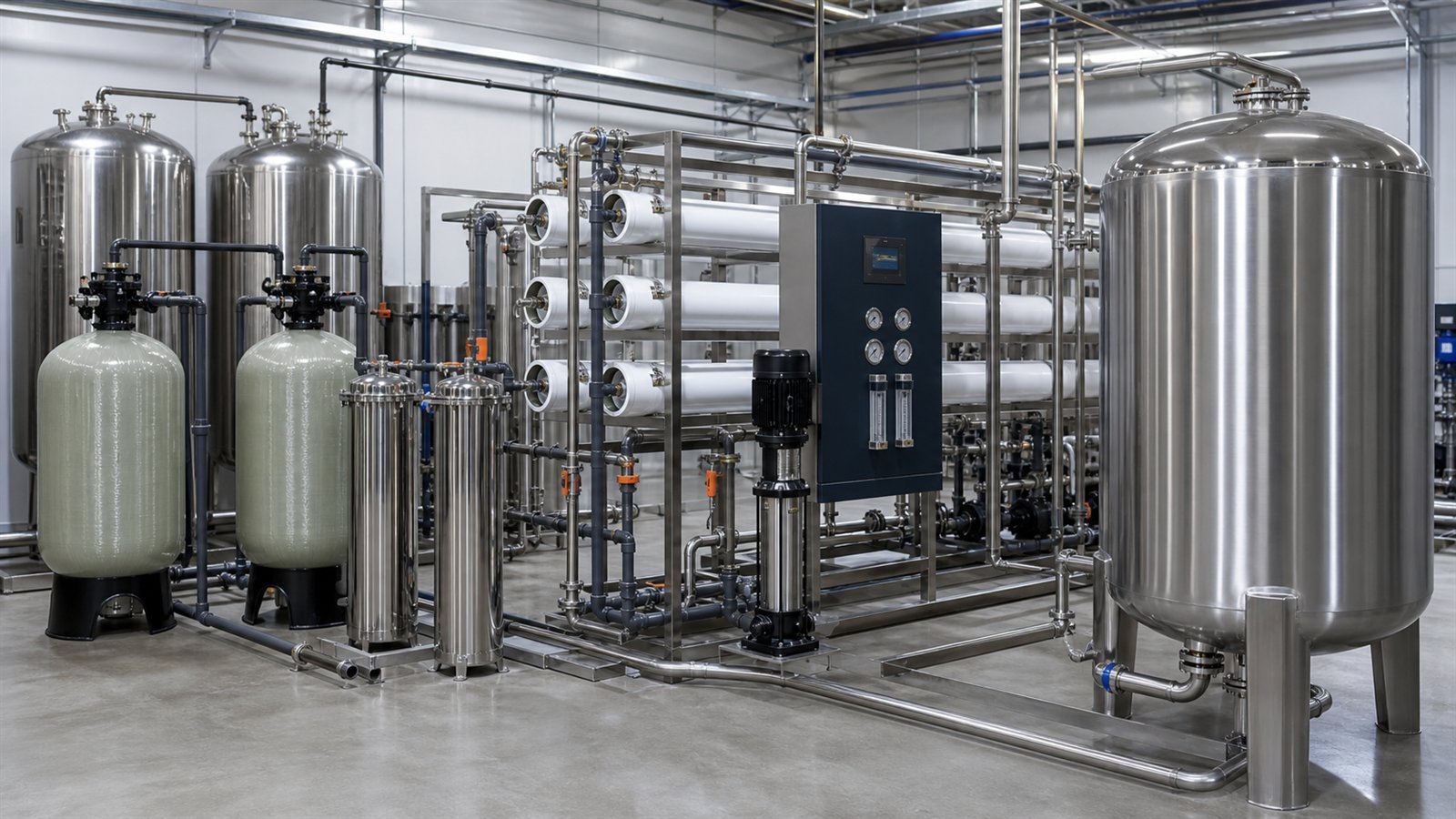
Complete line boundary
Equipment scope from water source to saleable pack
Use this sequence to compare suppliers on the same project boundary. A quotation may omit an entire stage while still using the phrase complete line, so every stage needs an included, optional or buyer-supplied status.
| Line stage | Buyer input | Supplier evidence |
|---|---|---|
| Water analysis and treatment | Raw-water report, finished-water target, peak demand, sanitation and recovery expectations. | Treatment flow diagram, component schedule, nominal and peak flow, tank sizes and sampling points. |
| Hygienic storage and transfer | Buffer volume, ozone or UV basis, recirculation, pipe route and filler inlet condition. | Tank, pump, valve, instrument and stainless-pipe scope with cleaning responsibility. |
| Bottle supply | Purchased empty bottles or in-house PET blowing, bottle drawing, preform, neck and bottle-size range. | Blower and mold scope, compressed-air demand, air conveyor and approved bottle tests. |
| Rinse-fill-cap center | Product, bottle volumes, cap, target good output and hygiene requirements. | Named monobloc configuration, contact materials, change parts, rated conditions and guarding. |
| Coding, labeling and inspection | Code content, label type, bottle moisture, orientation and reject rules. | Coder, dryer where needed, labeler, sensors, inspection points and reject handling. |
| Secondary packing | Film-only bundle, tray and film, carton, pack count and distribution route. | Packer speed, production materials, tunnel or carton scope and finished-pack acceptance. |
| Utilities and controls | Voltage, frequency, water, low- and high-pressure air, drainage, access and local conditions. | Connected-load schedule, utility quality limits, interface list and control responsibility. |
| FAT, shipment and startup | Test materials, duration, acceptance values, packing, Incoterm, installation and training boundary. | Signed FAT records, punch-list closure, export packing list, manuals, spares and startup plan. |
Capacity definition
How should bottled water line capacity be specified?
Ask for good bottles per hour at the filler discharge and good finished packs per hour at the line exit. A headline BPH number without bottle size, test duration and efficiency basis cannot be compared fairly.
Name every priority bottle
A line may run a small bottle faster than a large bottle because filling time, conveyor stability and packer cycle change. List each volume, bottle drawing and expected sales mix.
Balance every connected machine
Treatment flow, blower output, filler output, labeler and packer should support the same production plan. Define buffers and accumulation instead of hiding a downstream bottleneck.
Separate rated speed from accepted output
The proposal should state the reference bottle, operating conditions, continuous test period, allowed stops, rejects and the measurement point used during FAT.
Include changeover and sanitation time
Daily saleable output depends on product release, cleaning, bottle-format changes, material replenishment and planned maintenance, not only the fastest minute of operation.
Price and quotation
Compare price only after normalizing the scope
Bottled water filling line price changes with the source water, bottle route, speed, automation, package materials, test evidence and service boundary. Request a numbered commercial breakdown instead of one total with unclear exclusions.
Process system
Treatment stages, tanks, pumps, ozone or UV, pipework, CIP or sanitation scope and water-quality instruments.
Bottle system
Blower, molds, preform handling, compressors, dryers, receivers, chillers and air conveyor, or the empty-bottle infeed boundary.
Filling center
Rinser, filler, capper, cap handling, controls, contact materials, change parts, guarding and supplied format range.
Packaging system
Coding, drying, labeling, inspection, conveyors, shrink or carton packing, pallet handling and all production change parts.
Project delivery
Layout, documentation, FAT, export packing, freight basis, installation, commissioning, travel, training, warranty and remote support.
Buyer-side costs
Building, floor and drains, electrical distribution, utility piping, laboratory, permits, duties, local transport, raw materials and staff.
Common buying risks
Problems to prevent before the purchase order
Buying from a BPH label
The quoted speed may apply only to one small bottle and one machine. Require the complete-line basis for each priority format.
Ignoring raw-water evidence
A copied RO package can be too small, incomplete or unnecessary. Design treatment from current laboratory results and the local finished-water requirement.
Leaving the bottle unfinished
An unapproved bottle drawing can change the mold, air demand, transfer parts, label and pack. Freeze production-intent samples before manufacturing.
Accepting a short demonstration as FAT
Define materials, continuous run, output, quality samples, records and deviation closure in the contract before the machine is ready.
Forgetting site readiness
Confirm power, air, water, drainage, access, foundations, lifting, storage and local technicians before dispatch to avoid a machine waiting in crates.
Send to the supplier
RFQ inputs
- Raw-water laboratory report and finished-water target.
- Bottle and cap drawings plus production-intent samples.
- Bottle volumes and required good output for each format.
- Label, code, bundle or carton and pallet requirements.
- Factory plan, available utilities, access and destination.
- Requested FAT, documentation, installation and training scope.
- Budget stage and preferred delivery or Incoterm basis.
Receive from the supplier
Comparable outputs
- Process flow and numbered equipment list with boundaries.
- Capacity basis for every priority bottle and finished pack.
- Preliminary layout, utility schedule and interface list.
- Materials, components and format-change scope.
- FAT protocol, records, open-item and shipment-release method.
- Commercial breakdown, exclusions and buyer responsibilities.
- Delivery, packing, installation, training, spares and warranty terms.
Honest China sourcing support
How Allot fits into the project
Allot Tech (Suzhou) Co., Ltd. was founded in 2019. We do not claim that every machine shown is built in one Allot-owned factory. Our role is to help international buyers turn bottle, product, output and site facts into a clearer specification, compare suitable Chinese manufacturing partners, and keep technical assumptions, acceptance evidence and delivery responsibilities visible. Final configuration and performance must be confirmed in the signed supplier documents and tests.
Continue the research
Related equipment and buyer guides
Buyer questions
Direct answers before quotation
What is included in a complete bottled water filling line?
The scope may include water treatment, hygienic tanks and piping, PET bottle blowing or bottle infeed, rinsing, filling, capping, coding, labeling, inspection, packing, conveyors, controls, spares, FAT, export packing and startup support. Mark every item as included, optional or buyer supplied.
How do I compare bottled water line prices from China?
Send the same water report, bottle and cap data, output, packing format, utilities, destination and acceptance request to each supplier. Compare the numbered equipment list, rated basis, component scope, services, exclusions and buyer-side work before comparing the total.
Can one water filling line run several bottle sizes?
It can be designed for an agreed format range, but output, change parts, conveyor guides, cap handling, labels and pack patterns may change. List every intended bottle and require a changeover demonstration for the priority formats.
What should a bottled water line FAT prove?
The FAT should use agreed bottles, caps, labels and packing materials under recorded conditions. It should measure sustained integrated output, fill result, closure integrity, label and pack quality, stops, rejects, safety functions and unresolved items.
Define the complete water line before comparing prices
A water filling monoblock is only one part of a saleable bottled-water line. The practical equipment scope depends on the source water, bottle supply, label, final pack, workshop and target output. Confirming those interfaces early makes supplier quotations easier to compare and reduces missing equipment during installation.
| Line stage | Decision to confirm | Why it changes the project |
|---|---|---|
| Water treatment | Source-water report, finished-water target and storage | Defines pretreatment, filtration, RO or other treatment scope and hygienic piping |
| Bottle supply | Purchased empty bottles, preforms plus blower, or manual loading | Changes air conveyors, bottle handling, compressed air and layout |
| Rinsing, filling and capping | Bottle volume, neck, cap and target bottles per hour | Determines monoblock format, valve count, change parts and line speed |
| Labeling and coding | Sleeve, OPP or self-adhesive label plus code position | Changes bottle drying, conveyor control and label-machine selection |
| Secondary packing | Shrink bundle, tray, carton or manual packing | Determines downstream speed, accumulation and labor requirement |
Complete bottled-water scope
Engineer the line from the water report to the finished pallet
A useful proposal states which process and packaging stages are included, how the interfaces are sized and which buyer inputs still require confirmation.
| Project area | Buyer input to confirm | Engineering output |
|---|---|---|
| Source and treatment | Raw-water analysis, finished-water target, storage and sanitation | Treatment flow diagram, nominal flow and tank schedule |
| Bottle and closure | PET bottle or preform, neck finish, cap and volume range | Approved package data and change-part scope |
| Output and final pack | Bottles per hour, label, code and bundle or carton | Balanced line speed and acceptance conditions |
What the recommendation should define
A stage-by-stage scope covering treatment, bottle supply, rinse-fill-cap, labeling, packing, utilities, testing and shipment boundaries.