
Bottle labeling machine for beverage, water, juice and liquid packaging lines, including sticker labeling and sleeve labeling solutions from China.
Labeling Machine
Bottle labeling machines for beverage and liquid packaging lines, including sleeve labeling and sticker labeling solutions.
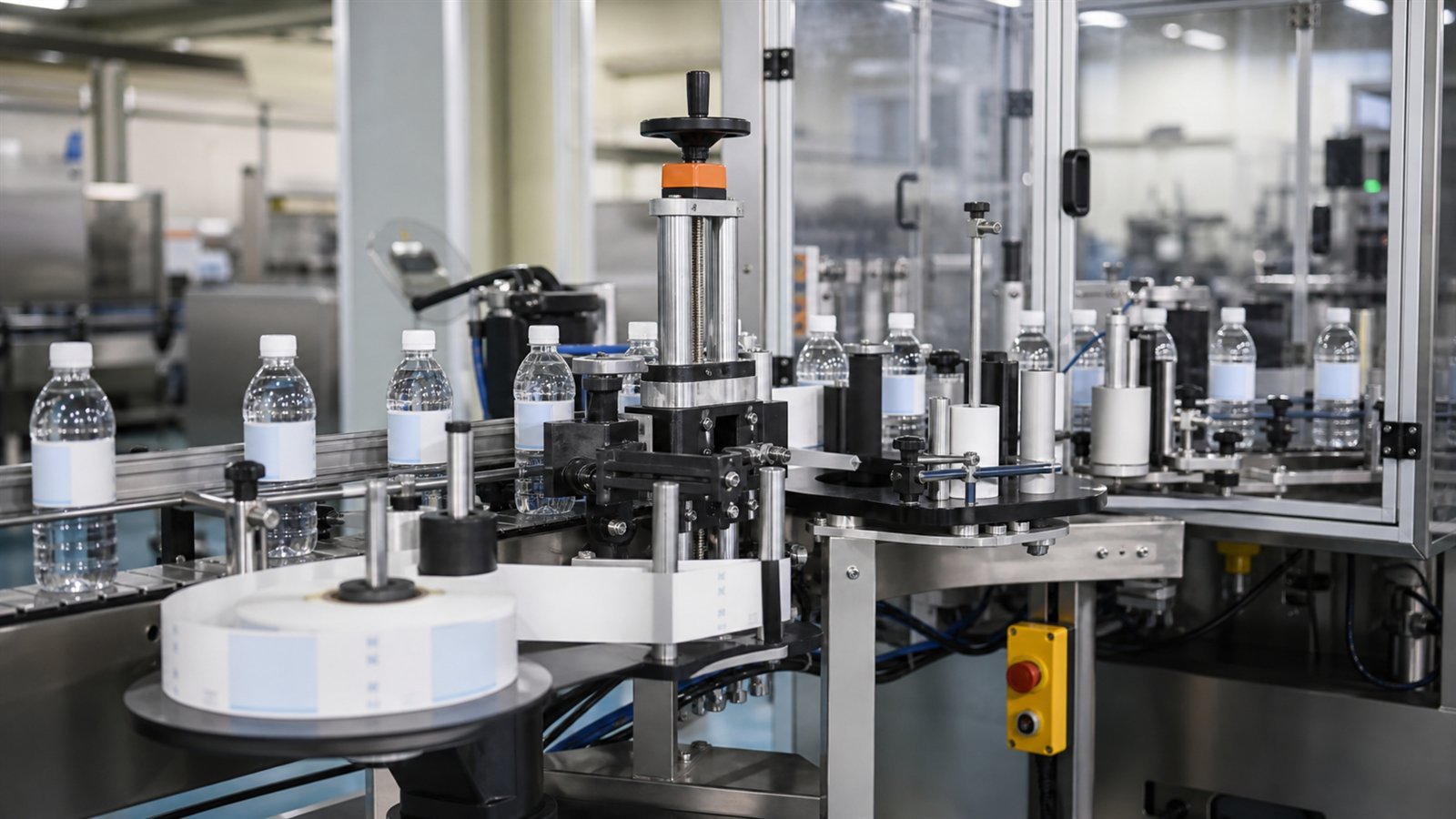
Labeling Solutions for Finished Bottles
Labeling equipment is used after filling and before final packing for round, square and special-shaped bottles.
Main Features
Sleeve or Sticker
Choose sleeve or self-adhesive labeling.
Bottle Compatibility
Configured for many bottle shapes.
Line Integration
Connects with coding and packing systems.
Typical Line Configuration
| Application | Bottle labeling for beverages and liquids |
|---|---|
| Containers | Round, square or shaped bottles |
| Capacity | Matched to filling line speed |
| Optional Equipment | Shrink tunnel, label checking, coder |
What We Need to Quote
- Product type, bottle or container size, cap type and packaging format.
- Target output per hour and working shifts per day.
- Factory layout, voltage, compressed air and water source conditions.
- Whether you need a single machine or a complete turnkey beverage production line.
Need a bottle labeling machine?
Contact Allot Tech at sales@allottech.com, +1 818 262 0958 or +86 186 6213 1120 for a practical machine recommendation.
Practical Notes for Bottle Labeling Machine Buyers
When comparing bottle labeling machine suppliers in China, the most reliable quotation starts from real production conditions, not only a machine name. Allot Tech checks product characteristics, package format, output target, utilities, layout and export requirements before recommending a beverage machinery solution.
Best-fit applications
This page is most relevant for water, juice, tea, oil and beverage packaging lines. We can help compare machine configuration, matching upstream and downstream equipment, and the practical space needed for installation.
How we match equipment
We review label type, bottle shape, label material and line speed. This helps avoid under-sized machines, unnecessary automation, missing conveyors, weak packaging plans or shipment problems after the order is placed.
Quote checklist
- Product and bottle or package size
- Target capacity per hour or per day
- Cap, label and packing style
- Factory layout, voltage and destination country
Common Questions About Bottle Labeling Machine
How do I choose the right bottle labeling machine?
Start with the product, container size, target capacity, available utilities and factory space. Allot Tech uses these details to match the filling, packing and auxiliary equipment instead of recommending a machine only by price.
Can this bottle labeling machine be shipped worldwide from China?
Yes. We can coordinate packing, export documents and international shipment from China. Buyers can contact sales@allottech.com with destination country and project requirements.
What information is needed for a quotation?
Please send product type, bottle or container drawings, output target, cap or label style, factory layout if available and any preferred automation level.
Technical decision paths
Research this equipment before quotation
Use the focused guides to define configuration, commercial assumptions and measurable acceptance conditions.
Bottle labeling machine answers
Choose a bottle labeling machine by package geometry, label material and real line conditions
Labeling quality depends on the bottle, label and operating environment together. Shrink sleeve, roll-fed OPP hot-melt and pressure-sensitive systems use different materials and controls. Bottle shape, moisture, orientation, roll direction, artwork registration, speed, coding and changeover all belong in the RFQ. Test production-intent bottles and label rolls at line speed before approving the machine.
Selection sequence
Match the labeling method to the real decorated package
Artwork appearance alone does not prove that a label will feed, register, adhere or shrink correctly. Use this sequence to qualify the complete application.
Map the bottle surface
Record diameter or panel, taper, ribs, seams, handle, orientation feature, dimensional tolerance and surface condition at the labeler.
Control the label specification
Freeze material, thickness, dimensions, pitch, registration mark, adhesive, roll winding, splice and artwork revision with the label supplier.
Choose the application principle
Compare sleeve, OPP hot-melt and pressure-sensitive systems against shape, coverage, appearance, speed, consumables and local supply.
Integrate coding and inspection
Define code location, orientation, presence, position and readable-quality checks plus the reject and confirmation method.
Run a production-condition FAT
Use wet or cold bottles where relevant, production labels, normal speed, reel changes, controlled defects and all agreed format changes.
Direct buyer answers
Bottle labeling machine questions buyers ask before ordering
Each answer identifies the decision, the evidence to request and the condition that should be tested before purchase.
Should I choose shrink sleeve, OPP hot-melt or self-adhesive labeling?
Shrink sleeves can cover shaped containers and offer broad decoration but require compatible film, application and a controlled shrink tunnel. Roll-fed OPP hot-melt systems are often evaluated for compatible high-volume cylindrical bottles and economical wraparound labels. Pressure-sensitive labeling can offer flexible graphics and format handling. Decide from bottle geometry, label area, surface condition, output, appearance, changeover and reliable local consumable supply.
Can one labeling machine run round, square and irregular bottles?
Some modular pressure-sensitive systems can be configured for several shapes, while sleeve and wraparound methods each have geometry limits. Square or irregular packs may need side, top, wrap or orientation control and additional stabilization. List every container with drawings and samples. Require the supplier to identify shared components, format parts, maximum speed by shape and the complete changeover procedure.
Why do bottle moisture and condensation cause labeling problems?
Water can reduce pressure-sensitive adhesive contact, interfere with hot-melt bonds, move sleeves, obscure sensors and weaken coding. Cold filled bottles may continue to condense after a dry test. Define temperature, humidity and surface condition at the labeler. The solution may involve drying, air knives, compatible label stock or a revised line position. Validate adhesion and appearance after normal storage, not only at discharge.
What label roll information must be sent to the machine supplier?
Provide label material, thickness, width, pitch or cut length, core diameter, maximum reel diameter, roll winding, registration mark, gap, adhesive or hot-melt requirement and artwork file. Include splice rules and normal material tolerances. The label converter and machine supplier should agree the machinability specification before production quantities are printed.
How is labeling machine speed calculated?
Speed depends on container pitch, label length, feeding and cutting cycle, bottle stabilization, required placement accuracy, inspection and downstream spacing. A nameplate maximum for one round bottle may not apply to a larger or oriented format. Ask for containers per minute by SKU and verify sustained output with production labels, normal reel changes and the connected conveyor.
What labeling accuracy should be specified?
Define measurable horizontal, vertical, rotational and overlap tolerances on a dimensioned package drawing. Include bottle and label manufacturing variation and state how samples are measured. For shrink sleeves, inspect final position after the tunnel; for OPP, inspect cut, overlap and bonds; for pressure-sensitive labels, check skew, bubbles and edge lift after an agreed dwell period.
How can transparent labels avoid bubbles and wrinkles?
Bottle surface finish, cleanliness, rigidity, label stock, adhesive, web tension, wipe-down pressure and application geometry all matter. A no-label-look result can be sensitive to molding marks and condensation. Test production bottles and labels over the expected temperature range. Establish acceptable visual defects with reference samples because a general promise of bubble-free labeling is not a measurable acceptance standard.
How are front and back labels oriented to a bottle feature?
Orientation may use a molded mark, seam, handle, cap feature or printed reference detected by a sensor or vision system. The bottle must be stabilized before rotation and label application. Provide the feature dimensions and tolerance. During FAT, challenge variation and verify both orientation and label placement at production speed, including after normal line stops.
What inspection and reject functions should a labeler have?
The system may check bottle presence, label presence, registration, skew, code or artwork identity depending on risk and technology. Define defects and detection limits. Run controlled missing, misplaced or unreadable labels through the line. A complete reject system removes the pack, confirms the action and records or alarms a failed rejection without mixing it back into good production.
What affects bottle labeling machine price from China?
Cost changes with labeling principle, speed, number of applicators, bottle stabilization, orientation, servo control, coding, vision inspection, reject handling, format range, tunnel or adhesive system, component specification and documentation. Compare included conveyors, change parts, consumable trials, export packing, installation and spares. One common RFQ prevents a basic applicator and a fully inspected line module from appearing equivalent.
Buyer inputs
Send a complete label application package
- Bottle drawings, tolerances and production samples.
- Bottle temperature and surface condition at labeling.
- Label artwork, material and dimensioned specification.
- Roll core, reel diameter, winding and registration data.
- Placement, orientation and appearance acceptance limits.
- Output by format plus coding and inspection needs.
- Connected conveyor, utilities, layout and destination.
Supplier evidence
Require label-system evidence
- Application-method rationale and operating window.
- Approved bottle and label machinability specification.
- Speed by format and material-replenishment assumptions.
- Format parts, recipes and timed changeover method.
- Inspection, rejection and fault-challenge matrix.
- Production-material FAT with measurable label limits.
- Consumables, manuals, spares and service scope.
How Allot works
Make label artwork and machine scope comparable in China
Allot Tech helps buyers coordinate bottle data, label specifications and test requirements with Chinese packaging-equipment partners. The company was founded in 2019 and expanded from digital media and online communication into manufacturing sourcing and export coordination in 2025. We state that history honestly and rely on production samples and measurable FAT records to establish labeling suitability.
Continue your research
Related filling and packaging decision guides
Follow the route closest to your liquid, package, process or purchasing stage.
Label application
Choose the labeling method from the bottle and label material
Bottle geometry, surface moisture, label construction and orientation requirements determine which labeler can run reliably at production speed.
| Project area | Buyer input to confirm | Engineering output |
|---|---|---|
| Shrink sleeve | Sleeve film, layflat, bottle contour and steam or electric tunnel | Sleeve position and shrink-quality acceptance |
| OPP hot melt | Cylindrical bottle, roll material, overlap and adhesive | Web handling, cut and seam inspection |
| Self-adhesive | Bottle panels, label roll, sensor mark and orientation | Application tolerance and changeover scope |
What the recommendation should define
A labeler recommendation tied to approved bottle and label samples, code position, line speed and inspection criteria.