
Project Delivery
Factory Acceptance Test Guide
A factory acceptance test checks agreed machine functions before shipment using a written protocol, available samples and defined evidence. It can reveal engineering or documentation gaps while correction is still practical.
Editorial basis
Planning guidance, not a final machine specification
Published by Allot Tech (Suzhou) Co., Ltd. This multilingual library uses a consistent buyer-decision framework and independently prepared language packs. Confirm the final configuration against supplier drawings, actual product and packaging samples, destination requirements and the signed technical agreement.
Direct answer
What this decision means for a real filling project
A factory acceptance test checks agreed machine functions before shipment using a written protocol, available samples and defined evidence. It can reveal engineering or documentation gaps while correction is still practical.
This guide is part of the Factory Readiness and Commissioning cluster. Read the hub when the project still needs a broader comparison.
Before a filling machine leaves China
What should a filling machine FAT actually prove?
A useful factory acceptance test connects each agreed requirement to a test condition, a measurement and a disposition. The result is a traceable evidence pack, not simply a machine-running video.
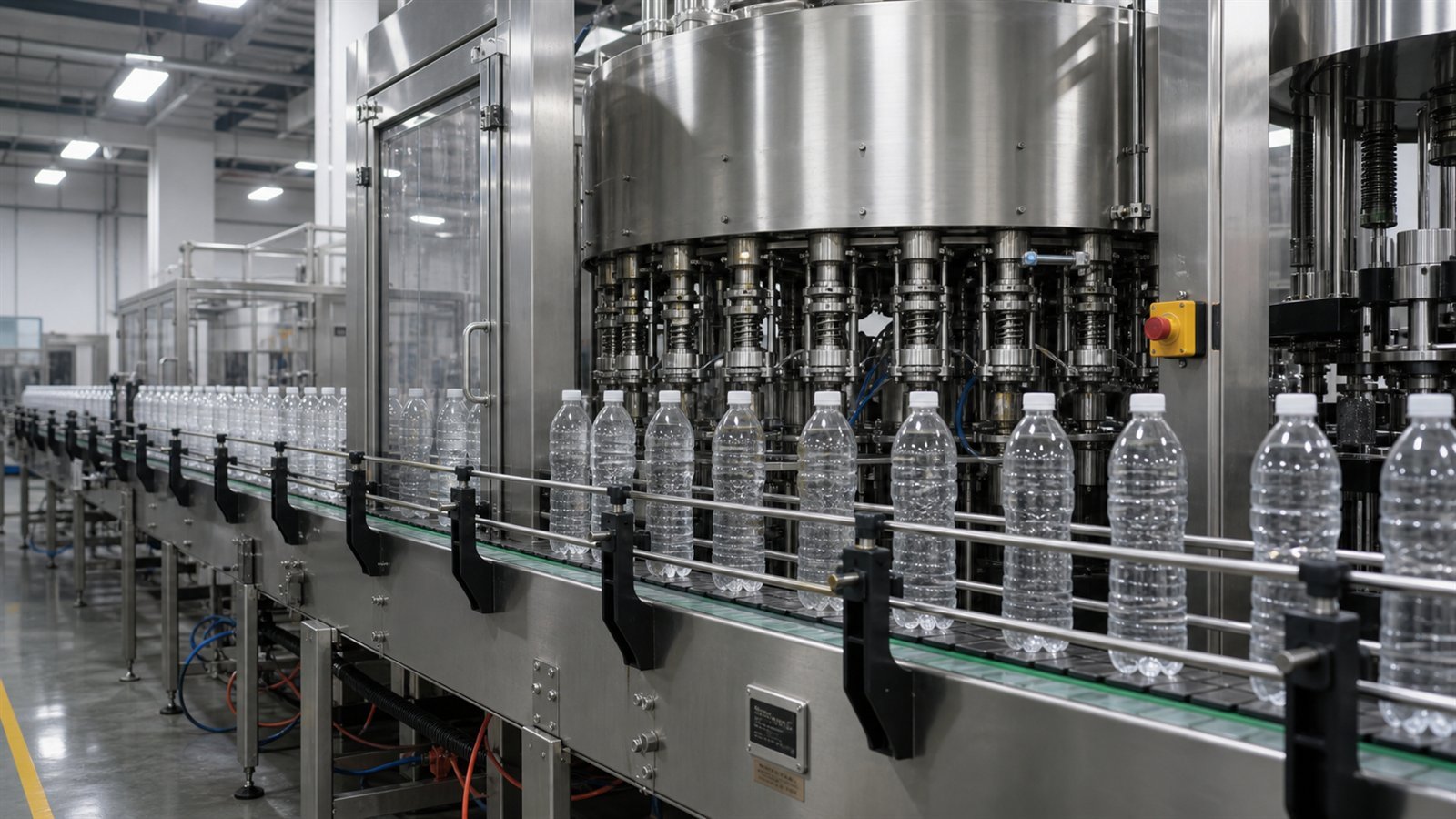
The protocol should identify the machine and software revision, bottle and closure drawings, product or test medium, measuring instruments, participants and test scope. Document anything unavailable at the supplier’s factory. A water demonstration, temporary conveyor or incomplete downstream line must not be described as proof of full production with the buyer’s beverage.
A practical FAT record for a filling and packaging line
| Test item | Record during the test | Acceptance decision |
|---|---|---|
| Sustained accepted output | Format, product condition, elapsed time, total output, rejected bottles, stop reasons and count location. | Compare accepted output over the agreed elapsed interval with the specified requirement. |
| Fill quantity or visible level | Each sampled result, nozzle or valve identity, target, unit, product temperature and instrument identification. | Apply the agreed per-container and repeatability criteria; a passing average must not hide individual failures. |
| Closure and package quality | Cap application, seal or leak checks, bottle condition, label/code results and reject reasons. | Use the approved package-specific checks, not appearance alone. |
| Format change and restart | Format pair, crew, complete elapsed time, adjustments, startup losses and first-good-product evidence. | Compare with the agreed changeover timing definition. |
| Controls and line interfaces | Approved stop/restart, alarm, starvation, blocking and reject-device demonstrations. | Qualified personnel perform the approved safe test procedure; no bypassed safeguards. |
| Documentation and supplied scope | Drawing/manual revisions, parts list, software backups, ordered tooling, spares and serial numbers. | Every missing or differing item receives an owner and a recorded resolution. |
Worked example: accepted output is not peak speed
Illustrative arithmetic, not a standard FAT duration or guaranteed machine rate: an agreed 60-minute elapsed trial records 3,600 filled bottles and 72 rejected bottles. Accepted output is 3,528 bottles, equivalent to 58.8 accepted bottles/minute; the reject proportion is 2%.
If the same interval includes six minutes of stops, 3,600 / 54 = 66.7 bottles/minute is the gross running rate during motion, not the accepted-output rate over the full hour. Report both on their own basis. Agree planned interruptions before the trial; do not remove inconvenient stops afterwards to create a better result.
How should filling accuracy be recorded?
Specify whether the requirement concerns mass, volume or a consistent visible level. Record the individual readings and the sample location or valve, not just a range quoted from a brochure. Agree sampling coverage across filling heads, the beginning and end of the trial and relevant stop/restart conditions.
When weighing filled bottles, subtract the defined container tare to obtain net product mass. Converting mass to volume also requires an appropriate measured product density at the test temperature. Keep the measurement basis explicit; a gram result must not be labelled a millilitre result without that conversion. Instrument suitability, sample size and limits belong in the agreed protocol.
Evidence and release
Remote FAT, open items and the limits of factory testing
For a remote witness session, agree camera coverage, instrument close-ups, document access, communication and file naming before testing. Keep an uninterrupted record of each agreed trial with its result sheet and time references. This is a practical approach to the remote collaboration addressed in PMMI’s virtual FAT guidance; a remote session still needs a written test plan and checklist.
What belongs on the shipment punch list?
Each open item needs an ID, requirement, observed difference, responsible party, due date, required evidence and release decision. For example: FAT-014, 1 litre format, cap alignment fails the agreed test; supplier to adjust the specified tooling and repeat the affected trial; buyer to review the result before shipment release. This is an example of a record, not a finding about any supplied machine.
Do not mark an unresolved safety-related item as accepted because the line reaches its output target. The responsible buyer and supplier personnel must agree disposition and escalation. Retests should identify the changed setting or part and verify the affected functions, rather than deleting the original failed result.
What remains for site acceptance?
A successful FAT does not establish performance with site utilities, final conveyors, production staff and every actual beverage. The site acceptance test must cover the remaining agreed conditions. Record responsibility for water, electricity, air, drainage, samples and final line interfaces in the installation plan.
For a China sourcing project, Allot Tech can help organise the RFQ, supplier responses and agreed evidence requirements. Test scope and witness arrangements must be confirmed for the specific order. Send the liquid, package drawings, target output and destination through the project enquiry form or sales@allottech.com.
Buyer planning guidance prepared by Allot Tech. Updated . This is not a safety certification or a substitute for a project-specific acceptance protocol.
Engineering inputs
Define the duty before comparing equipment
A useful proposal starts from agreed process and package information. These inputs keep suppliers from filling gaps with incompatible assumptions.
Send these details
- Approved specifications
- Test products or substitutes
- Containers caps and labels
- Target test duration
- Acceptance criteria
Require these checks
- Verify safety and functions
- Run representative formats
- Record output and quality
- Issue signed punch list and closure evidence
Line integration
Connect the choice to upstream and downstream equipment
Project delivery connects supplier engineering with the buyer's building, utilities, people and local obligations. A responsibility matrix and approved layout prevent interfaces from being discovered only during installation.
Comparison sheet
Put every supplier on the same basis
| Decision area | What to state in the RFQ | What to verify |
|---|---|---|
| Product | approved specifications | verify safety and functions |
| Package | test products or substitutes | run representative formats |
| Performance | containers caps and labels | record output and quality |
| Operation | target test duration | issue signed punch list and closure evidence |
| Project scope | Utilities, interfaces, documents, spares, packing, shipping and support | Written inclusions, exclusions and acceptance evidence |
Verification route
Move from a claim to recorded evidence
Use staged verification: document review, factory testing, shipment inspection, installation checks and site acceptance. Open items should have owners and deadlines rather than being hidden inside a general completion statement.
- Approve the duty, drawings and test conditions before fabrication is treated as final.
- Use production-intent product and packaging wherever they materially affect performance.
- Record results by format, operating condition and quality criterion rather than relying on a short edited video.
- List open items, owners and closure evidence before packing and again after site commissioning.
FAT execution
Twelve checkpoints before shipment release
- Approved specification and latest drawings are available.
- Machine identity and supplied modules match the order.
- Guards, stops, alarms and interlocks are demonstrated safely.
- Representative containers, closures and labels are used.
- Product or an agreed test medium is documented.
- All required formats and change parts are checked.
- Sustained output is recorded under agreed conditions.
- Fill, closure, label, code and pack quality are measured.
- Starvation, blocking, stop and restart behavior are observed.
- Utilities and consumable conditions are recorded.
- Manuals, drawings, backups and parts lists are reviewed.
- Every deviation has an owner, due date and closure evidence.
Buyer questions
Answers to common RFQ and acceptance questions
When is Factory Acceptance Test Guide useful?
Custom filling and packaging machines before final packing and dispatch. A short demonstration video is not equivalent to an agreed FAT with recorded criteria and open actions.
What details should be supplied before requesting a quotation?
Prepare the following project-specific information: approved specifications, test products or substitutes, containers caps and labels, target test duration, acceptance criteria. Drawings, photos and representative samples help the engineering review move from a budget assumption to a defined scope.
How should the proposed solution be checked before acceptance?
Use an agreed review or test plan to verify safety and functions, run representative formats, record output and quality, issue signed punch list and closure evidence. Record the conditions, measurements and open actions so the result can be compared with the approved specification.
One-Stop Beverage Equipment Solutions
Send the liquid, bottle, output and destination
Allot Tech (Suzhou) Co., Ltd. was founded in 2019. Our roots are in new-media and online communication; since 2025, we have combined that experience with China manufacturing sourcing to introduce practical beverage and liquid-packaging equipment to global buyers honestly and clearly.