
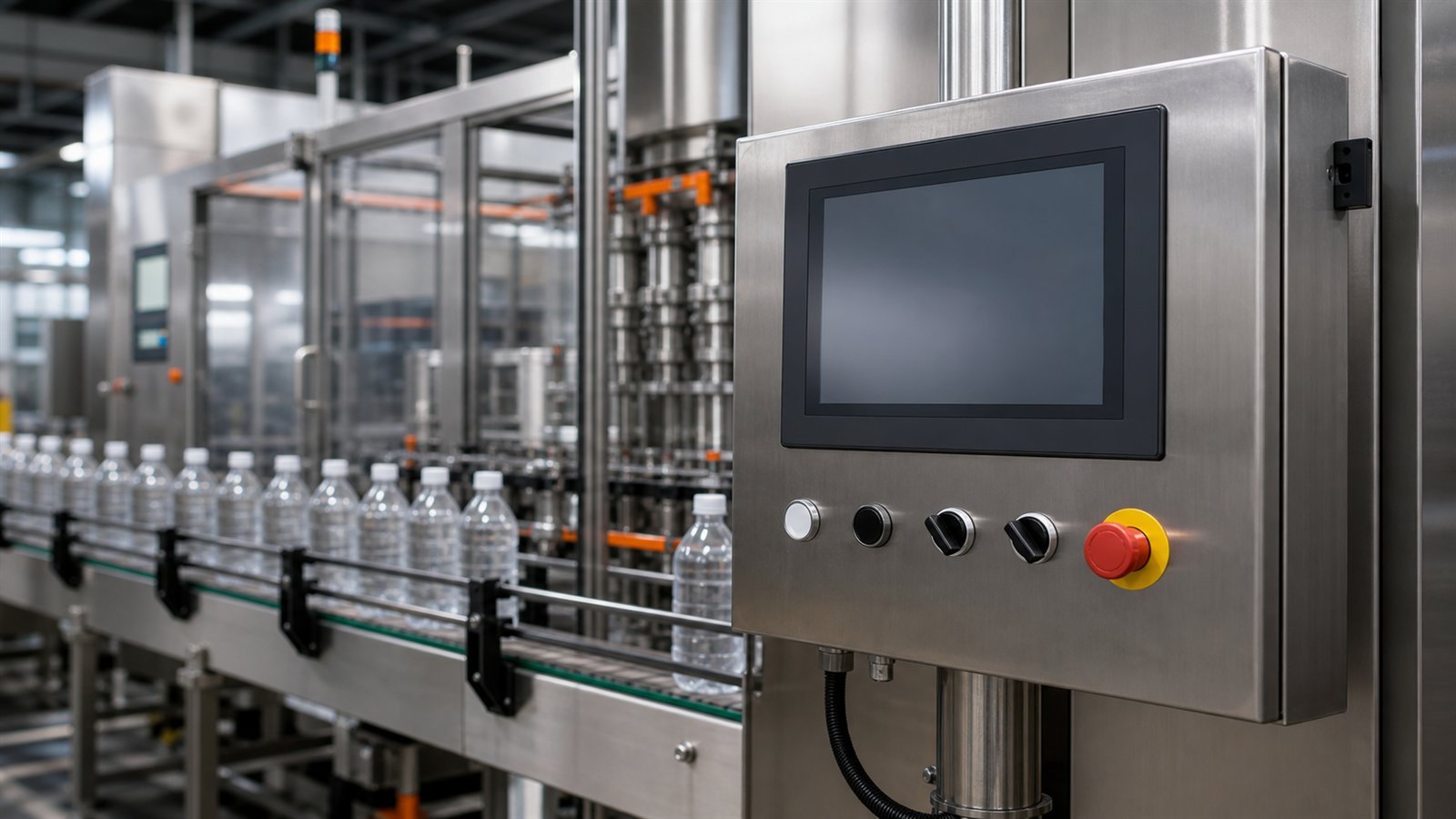
Complete Equipment Scope
Plan and troubleshoot filling line integration
Bring the filler, capper, labeler and packer into one documented plan. Resolve transfer problems, compare rates in common units and define evidence before buying or modifying an existing line.
Editorial basis
Planning guidance, not a final machine specification
Published by Allot Tech (Suzhou) Co., Ltd. This multilingual library uses a consistent buyer-decision framework and independently prepared language packs. Confirm the final configuration against supplier drawings, actual product and packaging samples, destination requirements and the signed technical agreement.
Editorial basis
Continue to the main equipment page
Use the commercial equipment page for application scope and quotation, and use this guide as the supporting decision record.Turn the gaps between machines into agreed requirements
Use this guide when adding a filler to an existing line or sourcing filling, capping and labeling from different suppliers. A complete equipment list says what you buy; an interface record says how the stations must work together and who resolves each open point.
This is procurement guidance, not a wiring drawing or control program. Qualified integrators must approve mechanical, electrical and safety interfaces. Routine machine-ready signals are not safety functions. Never bypass safeguards or modify energised equipment.
Define the accepted finished pack
Identify the actual liquid, bottle, closure, label and code revisions. Agree where good output is counted and how rejected or unfinished bottles are reconciled. A filled bottle at the filler outlet is not necessarily a sealed, correctly labeled finished pack.
Separate new supply from retained equipment
Record the supplier and model of every retained station. Assign the conveyors, change parts, controls modifications, installation and combined testing explicitly. Buying from one supplier can simplify coordination, but the written scope must still identify excluded equipment and the overall integration owner.
Plan interruptions and recovery before the trial
Include agreed upstream-starved and downstream-blocked conditions in an approved integration test. Qualified personnel should demonstrate controlled stops, restart permission and the handling of bottles left between stations. Record the cause, duration, recovery and rejected packs; do not evaluate only a short uninterrupted run.
Six interface handoffs to agree
- Package and tooling
- Version the bottle, cap, label and format parts. Check difficult package combinations with the actual samples, not capacity alone.
- Mechanical transfer
- Agree conveyor datum, direction, guide adjustment and bottle spacing. Review transfer stability, access and responsibilities for connecting sections.
- Rate and accumulation
- Use common rate units and the same SKU. Base usable buffering on actual containers and the interruption to be absorbed.
- Operating signals
- Document sender, receiver, meaning, timing and loss-of-communication behaviour. A shared PLC brand does not establish an agreed interface.
- Inspection and rejects
- Identify inspection ownership, bottle tracking and the reject destination. Keep rejected and unfinished bottles separate from accepted output.
- Combined acceptance
- Define factory and site test boundaries, equipment available, evidence and unresolved actions. Mark any partial test as partial.
Integration questions buyers should resolve
Can I keep my existing capper and labeler?
Possibly. Review their actual package range, tested rate, condition, transfer geometry and operating interfaces. Request drawings and a compatibility review before fixing the new filler scope; reuse is not guaranteed by matching conveyor width.
Why is the line slower than the fastest machine?
Finished output depends on all stations, supply, changeovers, stops and rejects. Compare rates for the same SKU and duty. Do not add standalone machine speeds together or treat a buffer as a cure for a persistent capacity mismatch.
Which bottle changes need new format parts?
Review the full package envelope: body, height, neck, closure and label position. Guides, handling tools, cap feeding and inspection may change even when fill volume is unchanged. Ask for a format-part matrix and its delivery scope.
Who should own the control interface?
Name one integration owner and identify each supplier's responsibilities for documentation, implementation and testing. Agree normal operating signals separately from safety functions. Using the same controller vendor is not proof of compatible logic or communications.
How should blocked and starved conditions be tested?
Use an approved plan that defines the conditions, expected station responses, restart authority and bottle accounting. Qualified personnel should perform the demonstration safely. Include recovery quality and reject handling, not only whether the conveyor starts again.
What if the retained machine is unavailable at factory testing?
Record which interfaces were simulated or not tested, the assumptions and remaining site checks. A standalone demonstration cannot prove the complete installation. Assign an owner and acceptance evidence for every unresolved interface before shipment.
Four inputs for an integration quotation
- Actual product and package revisions, SKU schedule and required accepted output.
- Existing machine models, photographs, layout and measured transfer references.
- Available operating-interface documents, utilities and proposed responsibilities.
- Factory/site test scope, remaining assumptions, training and handover requirements.
Download the line-interface planning record
Record evidence, an owner and status for each interface. This blank CSV is a project planning record, not a wiring plan, control specification or safety approval.
- Product, bottle, cap and label revisions
- New and retained equipment with suppliers
- Transfer drawings and mechanical datum
- Operating rates and accumulation assumptions
- Operating signals and interface owner
- Inspection, tracking and reject handling
- Factory/site test boundary and open actions
- Utilities, safety review and handover owner
Diagnose the lost output before buying more speed
When output misses the plan, another fast machine may not solve the problem. Use a common production window, the actual package and a traceable issue list to separate a sustained bottleneck from short interruptions, transfer faults and unfinished acceptance work.
Record the first event, not just the loudest alarm
For one agreed SKU, record the first observed interruption, the status of adjacent machines, buffer occupancy, duration and accepted output in the same time window. Check whether machine clocks agree. Several downstream alarms can be consequences of one upstream event; an alarm count alone does not identify the cause. Ask the responsible integrator to review evidence before changing speeds or controls.
Build a compatibility file for retained equipment
Collect revision-controlled layout and transfer drawings, available machine manuals, actual empty and filled samples, cap and label specifications, and the current format-part list. Mark unknown dimensions or undocumented interfaces instead of assuming they match. Ask which party will measure, review and approve each gap, and which changes require new parts or supplier support.
Plan the site cutover and the remaining tests
Separate what factory testing demonstrated from what still depends on the installed conveyors, site utilities and retained machines. Agree an installation window, qualified personnel, training, controlled document and software handover, and a recovery plan if the agreed checks fail. Schedule a site trial with actual materials; permission to ship is not evidence that every site interface has passed.
Worked example: common units and usable buffer time
These invented figures demonstrate arithmetic only, not an Allot Tech machine rating or a safe operating setting. Assume the same product and package, with no losses for the initial comparison. Real design must include approved operating behaviour, unusable spaces, stopping and recovery.
- Convert the packer rate before comparing machines
12 x 6 = 72
A filler rated at 120 bottles/min, capper at 100 and labeler at 90 do not establish a 90-bottle/min line if the packer makes 12 six-bottle packs/min. Its equivalent rate is 72 bottles/min. In this simplified serial line, 72 is an upper bound before stops and rejects, not guaranteed good output.
- Count free positions, not total conveyor capacity
40 / 90 x 60 = 26.7
If a usable buffer holds 60 bottles and already contains 20, only 40 positions are free. With an inflow of 90 bottles/min and zero outflow, those positions give about 26.7 seconds of ideal headroom. This excludes sensing, deceleration and reserve requirements; the result is not an allowable delay or a safety calculation.
- A buffer cannot remove a permanent rate mismatch
40 / (90 - 72) = 2.22
If inflow remains 90 bottles/min while outflow is 72, stock grows by 18 bottles/min. Forty free positions fill in about 2.22 minutes under these ideal assumptions. A larger buffer postpones the stoppage; it does not raise the sustained packing rate. Review line balance rather than buying conveyor length alone.
More questions before a retrofit or line quotation
How do I compare bottles per minute with packs per minute?
Multiply the pack rate by the number of bottles in that exact pack, then compare the same SKU and time basis. State whether a figure is a rated cycle speed, demonstrated running rate or accepted finished output. Different formats, stops, changeovers and rejects prevent a simple unit conversion from becoming a line-performance guarantee.
Why do bottles tip at one transfer below rated speed?
Document where the first unstable bottle appears, whether it is empty or filled, and its package revision. Request a review of the transfer geometry, guides, spacing and container condition by qualified personnel. A slower rate may hide an unresolved handover problem. Do not reach into moving equipment, defeat guarding or treat a speed increase as a diagnostic test.
Which integration costs should be itemised in the quote?
Ask separately about connecting conveyors, format parts, documentation, control integration, installation, site travel, test materials, training and follow-up work. Mark each item as included, excluded or provisional, with an owner and the basis for any allowance. A lower machine price is not a comparable installed-line price when interfaces and site acceptance are missing.
What evidence closes a site integration punch list?
For each issue, record the affected SKU, drawing or software revision, responsible party, approved corrective work and agreed retest. Retain counts of accepted and rejected packs, the test window and relevant stop or recovery observations. The named acceptance authority should confirm closure; a new video or a verbal statement alone does not resolve every interface.
Four records to request at handover
- An as-installed interface register with drawing revisions, retained-machine assumptions and clearly assigned responsibility for remaining open points.
- The agreed production-trial record: SKU, material lots, time window, counts, interruptions, rejected packs and the boundary of the demonstrated result.
- An itemised open-action list with an owner, due date, retest evidence and the person authorised to accept each closure.
- Approved operating and maintenance documents, training records and controlled software or parameter handover through the responsible supplier, not shared public credentials.
Project decision record
Complete Equipment Scope
Define the complete line boundary from product preparation and container supply through filling, closure, labeling, packing, pallet handling and export delivery.
- Complete line boundary
- Liquid Filling Equipment
- Reference basis
- Final performance must be confirmed with approved product and package samples.
- Related capacity and equipment guides
- Send the product, container, closure, fill volume, target output, final pack, factory conditions and destination.
RFQ · FAT · SAT · TCO
A five-part specification record for this project
Use these decision gates to turn search research into a comparable RFQ, test plan and delivery boundary.
Freeze the product and package samples before final machine selection.
Separate rated speed from sustained saleable output by SKU and shift.
Confirm utilities, layout, drainage, access and operator responsibilities.
Write measurable FAT and SAT criteria into the commercial agreement.
Compare total installed scope, spares, shipping and support instead of headline machine price.
Inputs required before quotation
- Product name, behavior, recipe conditions and temperature
- Container material, volume, dimensions, drawings and samples
- Closure type, neck finish, samples and integrity requirement
- Target output, shifts, SKU plan and future expansion
- Labeling, coding, secondary packing and pallet pattern
- Factory layout, voltage, water, air, steam and power conditions
- Destination country, port, delivery boundary and preferred Incoterm
From requirement to handover
- 01Approve product and packaging samples
- 02Freeze process flow, supply boundary and layout
- 03Normalize quotation, configuration and acceptance methods
- 04Track manufacturing, shipment documents and support plan
RFQ · FAT · SAT · TCO
A budget quote becomes technically useful only after the liquid, container, closure, output basis, line scope, site conditions and destination are confirmed.
Bring the filler, capper, labeler and packer into one documented plan. Resolve transfer problems, compare rates in common units and define evidence before buying or modifying an existing line.
| # | Complete line boundary | Reference basis |
|---|---|---|
| 01 | Core process and filling equipment | Final performance must be confirmed with approved product and package samples. |
| 02 | Container and closure handling | Final performance must be confirmed with approved product and package samples. |
| 03 | Labeling, coding and inspection | Final performance must be confirmed with approved product and package samples. |
| 04 | Packing, conveying and pallet handling | Final performance must be confirmed with approved product and package samples. |
| 05 | Utilities, installation and site work | Final performance must be confirmed with approved product and package samples. |
| 06 | Spares, export packing, freight and support | Final performance must be confirmed with approved product and package samples. |
Buyer engineering library
Common buyer questions
When can a reliable quotation be prepared?
After product, container, closure, fill volume, output, final pack and destination are confirmed, a budget figure can become a defined configuration.
Can the project include only one machine?
Yes. It can also integrate treatment, bottle blowing, filling, closing, labeling, packing and conveyors according to the required boundary.
How can international procurement risk be reduced?
Confirm the specification, brands, materials, drawings, FAT criteria, spares, export packing, transport and support responsibilities before payment milestones.
Complete Equipment Scope
Define the complete line boundary from product preparation and container supply through filling, closure, labeling, packing, pallet handling and export delivery. A budget quote becomes technically useful only after the liquid, container, closure, output basis, line scope, site conditions and destination are confirmed.
Beverage Equipment Engineering Guides
Send the product, container, closure, fill volume, target output, final pack, factory conditions and destination.