
Selection and Configuration Guide
Prove liquid filling accuracy before choosing a machine
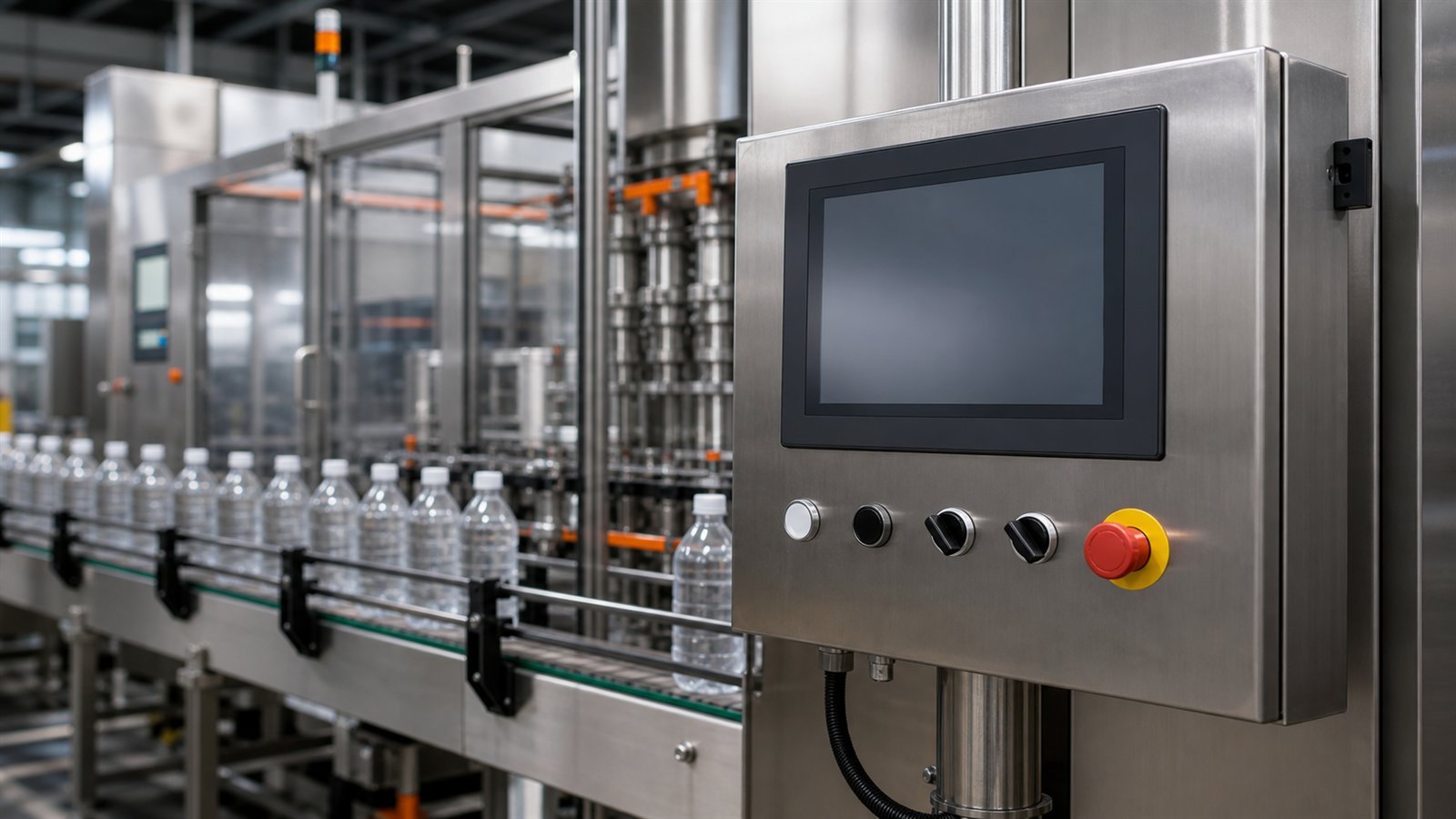
A speed claim or one perfect bottle cannot prove the right filler. Compare measured doses, nozzle behaviour and restart performance with your liquid and containers at the intended production condition.
Editorial basis
Planning guidance, not a final machine specification
Published by Allot Tech (Suzhou) Co., Ltd. This multilingual library uses a consistent buyer-decision framework and independently prepared language packs. Confirm the final configuration against supplier drawings, actual product and packaging samples, destination requirements and the signed technical agreement.
Editorial basis
Continue to the main equipment page
Use the commercial equipment page for application scope and quotation, and use this guide as the supporting decision record.Which filling problem must the supplier demonstrate away?
Write the finished-package requirement first: dose, visible level, clean neck, stable output or several of these. Then separate a shared process change from one-head variation. This guide turns those observations into a repeatable equipment trial rather than a list of possible replacement parts.
Use the machine manufacturer's approved setup and isolation procedures. Never bypass guards or interlocks, open pressurised product paths, or reach into moving equipment to inspect a fault.
Does the same fill level mean the same quantity?
Not necessarily. Bottle internal dimensions can vary, so equal visible levels can contain different quantities. An overflow filler controls a level; volumetric and net-weight methods control a different basis. Agree whether the result is volume, mass or appearance. For a volume check derived from weighing, tare each container and use product density measured at the test temperature, not an assumed water value.
How do I separate one bad nozzle from a shared fault?
Label consecutive samples by filling head and time. Compare each head's mean and range instead of pooling all bottles. One consistently offset head points to a local setting or product-path difference; several heads changing together point toward supply, temperature, air or a shared recipe. These patterns guide the next controlled check; they do not prove a root cause on their own.
Why do drips remain after the dose stops?
Distinguish a delayed drop, a string of product and a splash during nozzle withdrawal. Record when each appears and whether the bottle neck gets wet. Ask the supplier to demonstrate the proposed cutoff, nozzle motion and any suck-back with the actual liquid. Excessive suck-back can introduce air or affect dose consistency; a larger drip tray is not proof that the filling problem is resolved.
Can slower or bottom-up filling solve foaming?
They may help some non-carbonated liquids, but the trial must show both a clean fill and the agreed sustainable output. Capture nozzle position, liquid temperature, flow profile and settling time before closure. Do not simply add antifoam or change the formulation. Carbonated products need a suitable pressure-controlled process; an open-filling demonstration is not a substitute for representative carbonated trials.
Why does accuracy change after refilling or restarting?
Record samples before and after a supply refill, planned stop and format change. Compare recipe, supply level, temperature and priming condition. A stable short run can hide first-bottle losses or a drift as the product warms. Change one authorised setting at a time, retain the original record and repeat the same sample sequence; otherwise an apparent improvement is hard to attribute.
What proves improvement without hiding underfilled bottles?
Retain individual results, not just the overall average. Agree the sample plan, measurement uncertainty, quantity criteria and reject handling with the responsible quality team. Repeat the relevant start, stable-run and restart conditions after a change. A good mean can hide low individual fills; raising the target without diagnosing variation may merely increase giveaway. Three samples are a screening illustration, not an acceptance protocol.
Compare net-mass samples from two filling heads
Enter net product mass after subtracting each container's tare. Density must be measured for this product at the filling temperature. Volume equals net mass divided by density; review the heads separately before combining them.
Illustration only: at 1 g/mL, head A samples of 497, 499 and 501 g average 499 mL; head B samples of 502, 504 and 506 g average 504 mL. Each range is 4 mL. These are not specifications or customer results.
Per-head sample summary
Filling head A
- Mean volume
- mL
- Mean minus target
- mL
- Maximum minus minimum
- mL
Filling head B
- Mean volume
- mL
- Mean minus target
- mL
- Maximum minus minimum
- mL
Three samples per head show a mean offset and observed range only. This is not proof of accuracy, process capability or legal compliance. Account for scale and density uncertainty and use an agreed sampling plan for acceptance.
Send a trial brief that can be repeated
- Identify liquid, batch, filling temperature, density basis and any particles or foaming behaviour.
- Supply actual containers, closures, tare method, head IDs and the required finished-package result.
- Record recipe, intended output, refill condition, stops and the timing of every sample.
- Agree quantity limits, sample plan, instrument uncertainty and disposition with the quality team.
- Retest unchanged conditions after an authorised adjustment; keep original and revised raw results.
Project decision record
Selection and Configuration Guide
Select around the real liquid, container, closure, fill volume, output, shifts, changeovers and expansion plan instead of comparing machine names alone.
- Complete line boundary
- Liquid Filling Equipment
- Reference basis
- Final performance must be confirmed with approved product and package samples.
- Related capacity and equipment guides
- Send the product, container, closure, fill volume, target output, final pack, factory conditions and destination.
RFQ · FAT · SAT · TCO
A five-part specification record for this project
Use these decision gates to turn search research into a comparable RFQ, test plan and delivery boundary.
Freeze the product and package samples before final machine selection.
Separate rated speed from sustained saleable output by SKU and shift.
Confirm utilities, layout, drainage, access and operator responsibilities.
Write measurable FAT and SAT criteria into the commercial agreement.
Compare total installed scope, spares, shipping and support instead of headline machine price.
Inputs required before quotation
- Product name, behavior, recipe conditions and temperature
- Container material, volume, dimensions, drawings and samples
- Closure type, neck finish, samples and integrity requirement
- Target output, shifts, SKU plan and future expansion
- Labeling, coding, secondary packing and pallet pattern
- Factory layout, voltage, water, air, steam and power conditions
- Destination country, port, delivery boundary and preferred Incoterm
From requirement to handover
- 01Approve product and packaging samples
- 02Freeze process flow, supply boundary and layout
- 03Normalize quotation, configuration and acceptance methods
- 04Track manufacturing, shipment documents and support plan
RFQ · FAT · SAT · TCO
A budget quote becomes technically useful only after the liquid, container, closure, output basis, line scope, site conditions and destination are confirmed.
A speed claim or one perfect bottle cannot prove the right filler. Compare measured doses, nozzle behaviour and restart performance with your liquid and containers at the intended production condition.
| # | Complete line boundary | Reference basis |
|---|---|---|
| 01 | Core process and filling equipment | Final performance must be confirmed with approved product and package samples. |
| 02 | Container and closure handling | Final performance must be confirmed with approved product and package samples. |
| 03 | Labeling, coding and inspection | Final performance must be confirmed with approved product and package samples. |
| 04 | Packing, conveying and pallet handling | Final performance must be confirmed with approved product and package samples. |
| 05 | Utilities, installation and site work | Final performance must be confirmed with approved product and package samples. |
| 06 | Spares, export packing, freight and support | Final performance must be confirmed with approved product and package samples. |
Buyer engineering library
Common buyer questions
When can a reliable quotation be prepared?
After product, container, closure, fill volume, output, final pack and destination are confirmed, a budget figure can become a defined configuration.
Can the project include only one machine?
Yes. It can also integrate treatment, bottle blowing, filling, closing, labeling, packing and conveyors according to the required boundary.
How can international procurement risk be reduced?
Confirm the specification, brands, materials, drawings, FAT criteria, spares, export packing, transport and support responsibilities before payment milestones.
Selection and Configuration Guide
Select around the real liquid, container, closure, fill volume, output, shifts, changeovers and expansion plan instead of comparing machine names alone. A budget quote becomes technically useful only after the liquid, container, closure, output basis, line scope, site conditions and destination are confirmed.
Beverage Equipment Engineering Guides
Send the product, container, closure, fill volume, target output, final pack, factory conditions and destination.