
Carbonated drink filling line for soda water, sparkling beverages and soft drinks, including mixing, filling, capping, labeling and packing equipment from China.
Carbonated Drink Filling Line
Carbonated drink filling line for soda water, sparkling drinks and carbonated soft drink production with filling, capping and packaging equipment.
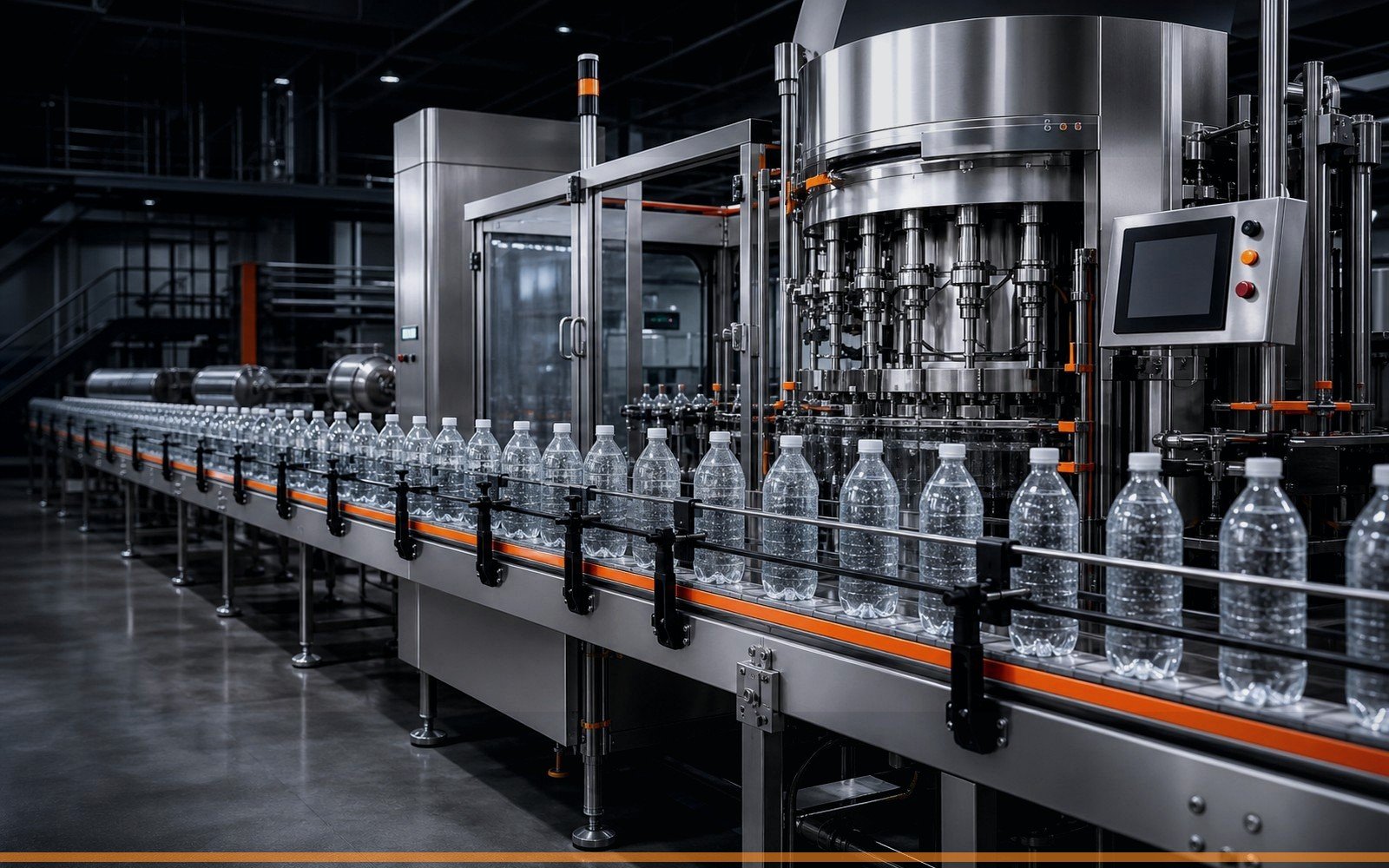
Filling Line for Sparkling and Carbonated Drinks
The carbonated drink filling line is used for soda water, sparkling beverages and soft drinks that require pressure filling and stable CO2 retention.
Main Features
Pressure Filling
Designed for carbonated products that need controlled filling.
Capping and Sealing
Matched capping system helps maintain carbonation.
Complete Packaging
Can connect labeling, coding, shrink wrapping and carton packing.
Typical Line Configuration
| Application | Soda water, sparkling water and carbonated beverages |
|---|---|
| Containers | PET or glass bottles |
| Capacity | Small to high-speed beverage lines |
| Optional Equipment | Carbonation system, mixer, labeling, coding, packing |
What We Need to Quote
- Product type, bottle or container size, cap type and packaging format.
- Target output per hour and working shifts per day.
- Factory layout, voltage, compressed air and water source conditions.
- Whether you need a single machine or a complete turnkey beverage production line.
Need a carbonated drink filling line?
Contact Allot Tech at sales@allottech.com, +1 818 262 0958 or +86 186 6213 1120 for a practical machine recommendation.
Practical Notes for Carbonated Drink Filling Line Buyers
When comparing carbonated drink filling line suppliers in China, the most reliable quotation starts from real production conditions, not only a machine name. Allot Tech checks product characteristics, package format, output target, utilities, layout and export requirements before recommending a beverage machinery solution.
Best-fit applications
This page is most relevant for sparkling water, soda and soft drink production. We can help compare machine configuration, matching upstream and downstream equipment, and the practical space needed for installation.
How we match equipment
We review CO2 level, bottle pressure rating, filler capacity and cooling requirements. This helps avoid under-sized machines, unnecessary automation, missing conveyors, weak packaging plans or shipment problems after the order is placed.
Quote checklist
- Product and bottle or package size
- Target capacity per hour or per day
- Cap, label and packing style
- Factory layout, voltage and destination country
Common Questions About Carbonated Drink Filling Line
How do I choose the right carbonated drink filling line?
Start with the product, container size, target capacity, available utilities and factory space. Allot Tech uses these details to match the filling, packing and auxiliary equipment instead of recommending a machine only by price.
Can this carbonated drink filling line be shipped worldwide from China?
Yes. We can coordinate packing, export documents and international shipment from China. Buyers can contact sales@allottech.com with destination country and project requirements.
What information is needed for a quotation?
Please send product type, bottle or container drawings, output target, cap or label style, factory layout if available and any preferred automation level.
Carbonated drink filling lines for PET bottles, glass bottles and cans
Carbonated soft drink machinery needs more than a normal filling valve. Buyers should compare CO2 mixing, isobaric filling, foam control, capping or seaming, pressure stability, bottle or can handling and packing.
Quotation details buyers should prepare
- Product type: soda, sparkling water, flavored carbonated drink, beer-style beverage or energy drink.
- Container: PET bottle, glass bottle or aluminum can with exact volume and cap/lid specification.
- Carbonation level, filling temperature, mixer scope and CO2 control requirement.
- Packing method: shrink pack, carton, tray, can multipack or palletizing.
For carbonated beverages in cans.
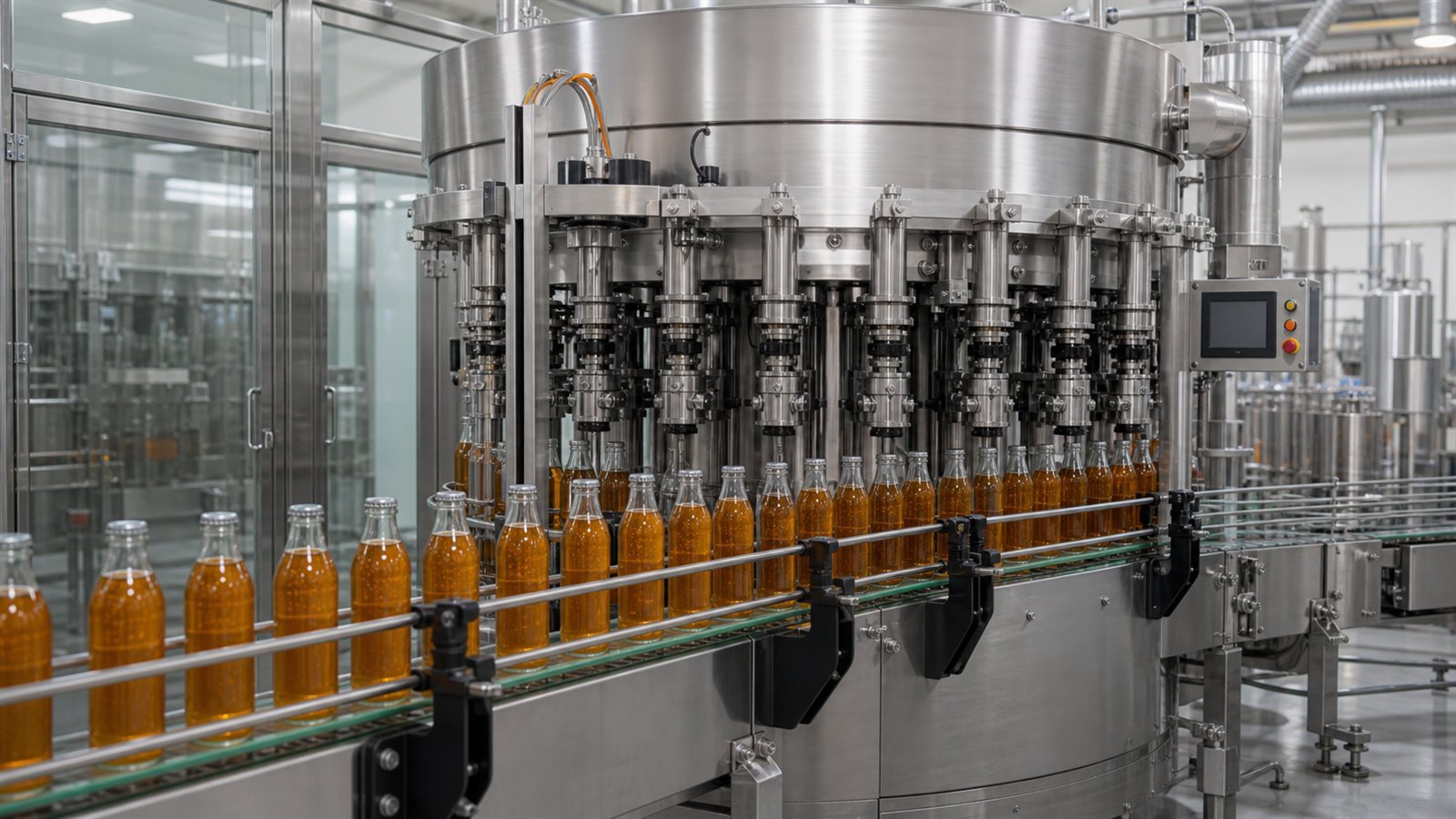
Glass bottle fillingFor glass bottle soda or drinks.
Packing machineFinish packs for distribution.
FAQ
What makes CSD filling different from water filling?
Carbonated beverages require pressure filling, CO2 control and foam management, while still water filling normally uses a simpler non-pressure process.
Can one line fill both sparkling water and soda?
Often yes if the container and process requirements are compatible, but carbonation level, syrup mixing, caps and cleaning process should be confirmed before quotation.
Carbonated drink line buyer answer
What makes a carbonated drink filling line different?
A carbonated drink filling line must keep product temperature, pressure, dissolved gas and closure timing under control from preparation through the filler. A complete scope can include water treatment, syrup preparation, proportioning, deaeration, chilling, carbonation, a pressure-rated product path, isobaric filling, capping or seaming, warming or drying, coding, labeling and packing. Stable output depends on the beverage, CO2 target, container and fill conditions; do not compare two CSD quotations until those values and the acceptance method are written beside the rated speed. The proposal should also identify the measurement instruments, production materials and site conditions needed to repeat the agreed result after installation.
Page updated 30 August 2026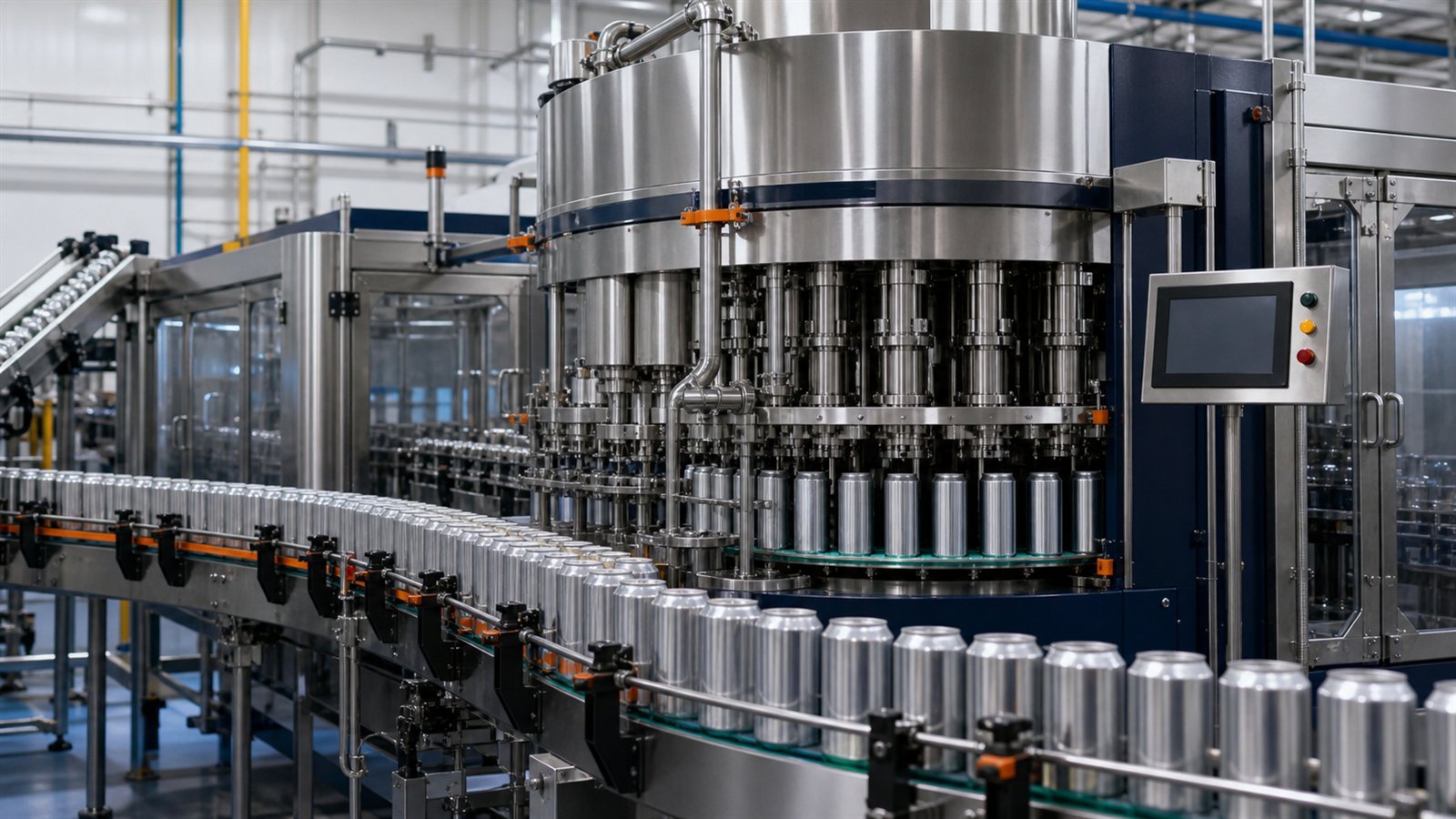
Complete line boundary
Build the CSD line around the carbonation target
The filler cannot correct an unstable upstream beverage. Define the preparation and package interfaces so the proposed line has one temperature, pressure, gas and output basis.
| Line stage | Buyer input | Supplier evidence |
|---|---|---|
| Water and syrup preparation | Treated-water quality, recipe ratio, Brix control, ingredient handling and batch or continuous plan. | Treatment, syrup room, tanks, filters, pumps and control scope. |
| Deaeration and proportioning | Inlet conditions, dissolved oxygen objective, water-to-syrup ratio and recipe change method. | Deaerator, mixer or proportioner, instruments, calibration and product-recovery plan. |
| Chilling and carbonation | Product temperature window, CO2 target, supply quality, pressure and expected variation. | Chiller, carbonator, buffer, controls, rated conditions and utility load. |
| Pressure-rated transfer | Pipe route, buffer behavior, pressure loss, sanitation and filler inlet condition. | Tank, pumps, valves, pressure instruments, relief and cleaning boundaries. |
| Isobaric filling | PET, glass or can, volume, fill level, temperature, pressure and target output. | Filler configuration, valve basis, snift or pressure-release control, change parts and guarding. |
| Closure application | Cap, crown or can end, supplier drawing, application value and leak or seam requirement. | Capper or seamer tooling, feed system, inspection and closure-integrity evidence. |
| Post-fill handling | Condensation, package temperature, code, label, inspection and pack format. | Warmer or dryer where needed, conveyors, coder, labeler, inspection and packer. |
| Acceptance and startup | Test beverage or surrogate, continuous run, gas and fill sampling, records and site conditions. | FAT protocol, SAT division, instruments, punch-list closure, training and startup plan. |
Capacity definition
State the CSD capacity at defined operating conditions
Carbonated output can change with bottle size, product temperature, CO2 target, pressure stability, foam, closure and downstream handling. The rated basis belongs next to every capacity claim.
Define the beverage condition
Record the intended product temperature, dissolved-gas target, pressure basis and recipe properties. A water-speed test is not automatically the accepted CSD speed.
Define the exact container and closure
PET pressure bottles, glass bottles and cans require different handling and closure equipment. Package drawings and production samples should drive the change parts and test.
Measure loss and quality with output
Acceptance can include saleable units, fill level or mass, gas retention, closure integrity, foam or product loss, rejects and stop-restart behavior.
Balance preparation and packing
The mixer, chiller, carbonator, filler, capper or seamer, warmer, labeler and packer must support the same sustained production plan.
Price and quotation
Compare complete CSD scope, not filler price alone
Two isobaric fillers can sit inside very different projects. Normalize the upstream beverage system, pressure-rated product path, closure equipment, utilities, quality evidence and service boundary before comparing price.
Beverage preparation
Water treatment, syrup system, tanks, dosing, filtration, deaeration, proportioning, chilling and carbonation.
Filling block
Rinsing or container preparation, isobaric filler, pressure-release strategy, capper or seamer, controls, guarding and formats.
Post-fill equipment
Warmer or dryer where required, coding, labeling, inspection, conveyors, packing and accumulation.
Utilities and consumables
Electrical load, cooling, compressed air, CO2 quality and supply, water, drainage, cleaning chemicals and production materials.
Testing and records
Agreed product or surrogate, instruments, samples, output, gas, fill, seam or torque evidence, stops, rejects and open-item closure.
Delivery and service
Layout, manuals, spares, export packing, Incoterm, installation, commissioning, training, warranty and local responsibilities.
Common buying risks
Problems to prevent before the purchase order
Quoting without a CO2 and temperature basis
A speed claim cannot be evaluated when the product condition is missing. Put the rated and accepted conditions in the technical agreement.
Treating the carbonator as a separate accessory
Preparation instability reaches the filler immediately. Size and control the chiller, carbonator, buffer and transfer path as one process.
Leaving closure quality undefined
Poor cap torque, crown application or can seam can lose gas even when filling appears stable. Define the closure test and records.
Ignoring condensation and warming
Cold packages can affect coding, labels, cartons and finished-pack quality. Review the environment and downstream surface condition.
Accepting a short low-gas run
Agree the product or surrogate, target conditions, continuous duration, sampling and correction process before FAT.
Send to the supplier
RFQ inputs
- Beverage recipe family, Brix, acidity and CO2 target.
- Product temperature and pressure basis at the filler.
- PET, glass or can drawing plus cap, crown or end data.
- Volume range and good output for every priority format.
- Code, label, pack pattern and finished-pack requirement.
- Factory layout, utilities, CO2 supply and destination.
- FAT, SAT, installation, documentation and training scope.
Receive from the supplier
Comparable outputs
- Process flow from treated water and syrup to packed product.
- Rated conditions for mixing, chilling, carbonation and filling.
- Equipment list, format scope and pressure-rated interfaces.
- Utility schedule, preliminary layout and control boundaries.
- Closure inspection and product-quality acceptance method.
- FAT and SAT evidence plan with unresolved-item closure.
- Commercial exclusions, delivery, service, spares and warranty.
Honest China sourcing support
How Allot fits into the project
Allot Tech (Suzhou) Co., Ltd., founded in 2019, helps overseas buyers prepare and compare beverage-equipment proposals from Chinese manufacturing partners. For a CSD project, our contribution is clearer communication around recipe conditions, package data, line boundaries, FAT evidence, delivery and support. During supplier review, ask each bidder to mark which operating values are confirmed, which depend on samples or trials, and which remain for site validation. This makes commercial differences easier to trace without pretending an early proposal is final engineering. The machinery builder and buyer must confirm final engineering, while the beverage owner remains responsible for recipe validation and destination-market compliance.
Continue the research
Related equipment and buyer guides
Buyer questions
Direct answers before quotation
What equipment is in a carbonated drink filling line?
A project may include water treatment, syrup preparation, proportioning, deaeration, chilling, carbonation, pressure-rated transfer, container rinsing, isobaric filling, capping or seaming, warming or drying, coding, labeling, inspection and secondary packing.
Why is isobaric filling used for carbonated drinks?
The container is managed under controlled pressure so the product can enter with less sudden gas release and foaming. The actual result also depends on product temperature, carbonation, pressure stability, container and pressure-release control.
What information is needed for a CSD line quotation?
Provide the recipe family, Brix and CO2 target, filling temperature and pressure basis, container and closure drawings, volume and output, package materials, utilities, destination and the required FAT and startup scope.
How should a carbonated filling line be accepted?
Agree the product or justified surrogate, temperature, carbonation and pressure conditions, test duration and measurement methods. Record integrated output, fill result, gas or agreed quality checks, closure integrity, stops, rejects and open items.
Protect carbonation from mixing through capping
A carbonated drink line must control temperature, pressure and product transfer as one system. The mixer, chiller, buffer, isobaric filler and capper should be sized together so the product reaches the package with stable carbonation and manageable foam.
| Control point | What must match | Buyer input |
|---|---|---|
| Syrup and water preparation | Mixing accuracy, treatment quality and production batch plan | Formula, Brix target, water source and batch size |
| Chilling and carbonation | Product temperature, CO2 target, pressure and buffer volume | Desired carbonation level and ambient operating conditions |
| Isobaric filling | Container pressure resistance, valve design and filling speed | PET, glass or can drawing plus target output |
| Capping or seaming | Closure application, pressure retention and leak inspection | Cap or can-end specification and samples |
| Downstream handling | Conveyor stability, warm-up or drying, labeling and packing | Finished-pack format and available factory layout |
Carbonation control
Coordinate temperature, pressure and closure timing as one system
Stable CSD output depends on preparation and filling conditions, not only the number of filling valves. The quote should state its operating basis.
| Project area | Buyer input to confirm | Engineering output |
|---|---|---|
| Recipe and mixing | Water quality, syrup ratio, Brix and batch plan | Mixer capacity and ratio-control basis |
| Chilling and carbonation | Filling temperature, CO2 target and pressure | Chiller, carbonator, buffer and loss assumptions |
| Container and closure | PET, glass or can plus cap or end specification | Pressure-rated handling and closure-integrity checks |
What the recommendation should define
A capacity basis that connects mixer, chiller, carbonator, isobaric filler, capper or seamer and downstream packaging.