
Allot Tech
How to choose a liquid filling machine
Choose the dosing objective first: volume, net weight or visible level. Then shortlist equipment against actual product behavior, the container and your production schedule. Confirm the difficult combinations in a sample trial before choosing head count or automation.
English
Compare the filling methods against your product
| Method | When to evaluate it | What the trial must resolve |
|---|---|---|
| Gravity | Free-flowing, non-carbonated liquids | Supply level and temperature effects on dose and cycle |
| Overflow / level | Consistent appearance in suitable bottles | Return-product compatibility and quantity despite bottle-volume variation |
| Piston | Viscous products; particles with a suitable flow path | Cylinder range, valve passage, seals and cleanout |
| Pump | Product-specific pumping and dose control | Pump family, calibration, shear, feed and wear |
| Flowmeter | A suitable measured-flow dosing system | Meter type, product properties, bubbles and calibration |
| Net weight | A dose controlled by product mass | Individual tare, stable weighing, cutoff and independent checks |
Gravity describes how product moves; it does not alone identify the measurement method. Ask whether the proposed machine controls time, volume, level or mass. A matching fill level is not proof of matching volume. Compare stated tolerances only when the dose, product, temperature, speed, sampling and measurement basis are the same.
Calculate a rate that can meet the shift target
Planning example, not an equipment rating: an 8-hour shift with 2 hours assigned to cleaning and changeovers leaves 6 hours. For 12,000 good bottles and an assumed 0.80 factor for remaining unplanned stops and rejects, the reference running rate is 12,000 ÷ (6 × 0.80) = 2,500 bottles/hour. Do not deduct those planned losses again inside the factor. Replace assumptions with measured values and check capping, labeling and packing at the same SKU.
Choose automation from the complete workflow
Evaluate semi-automatic equipment for shorter batches when bottle placement, closure and removal can be staffed reliably. Evaluate an automatic line for sustained demand when feeding, transfer, closure and inspection can be integrated. Ask for an operator-task list and a timed changeover. Automatic filling with manual cap placement still needs labor; an upgrade is only credible when controls, space and interfaces are specified.
Four decisions to settle before ordering
- Approve the product window, smallest and largest dose, bottle and closure revisions.
- Compare actual-product results for quantity, foam, particles, dripping and good output.
- Demonstrate format change and access for cleaning; define validation work separately.
- Freeze included equipment, utilities, change parts, exclusions and FAT/SAT criteria.
Prepare a brief suppliers can compare
Send product and temperature, bottle and cap drawings or samples, fill sizes, good output and shift pattern, cleaning needs, factory utilities and destination. Allot Tech can help organize these inputs into equipment sourcing requirements.
Six selection problems to resolve before ordering
Start with the product that is hardest to fill, not the easiest demonstration. List every planned liquid and bottle size, then separate requirements that can share one setup from those needing change parts or a different process. Use the following questions to build a shortlist for testing.
Is viscosity enough to choose between gravity, piston and pump filling?
No. A free-flowing still liquid may suit gravity or a compatible metered system; a thicker product may justify piston or positive-displacement pump trials. Record viscosity at the actual filling temperature, including cold start. Foam, shear sensitivity, supply conditions and cleaning access can rule out an otherwise plausible choice. A single viscosity value is not a machine specification.
What should I ask for when the liquid foams?
Ask for a trial of nozzle position, flow profile and settling time in your real bottle. Compare dose repeatability, wet bottle necks, overflow loss and output after capping, not just the time to open a valve. Some overflow systems can manage foam, but the product must tolerate the return circuit. Carbonated beverages require a separate pressure and process assessment.
Which filler can handle sauce or juice with pieces?
Document the largest particle, its concentration, shape and fragility. Review the entire route through the pump, valves, hoses and nozzle; the narrowest passage can determine suitability. Ask for observations of blockage, particle damage and distribution between containers. A wide nozzle alone does not prove that the upstream product path can handle pieces.
Should I specify volume, net weight or the same visible fill level?
These are different targets. Overflow filling controls visible level, while container variation can still change the amount inside. A volumetric dose controls volume; a net-weight system accounts for container tare. Agree the measurement basis and tolerance separately from appearance. If converting mass to volume, define density and temperature rather than treating grams as millilitres.
Can one machine fill both small bottles and large containers?
Request a format matrix showing fill range, neck opening, container height, support, nozzle and closure for each pack. Check the smallest dose as well as the largest, plus the least stable bottle. Record which parts and settings change. A stored recipe does not replace physical adjustments, cleaning or a restart trial after changeover.
Is an automatic line worthwhile for small, mixed batches?
Compare saleable packs per shift with the available operators, product changes, washing, setup and packing work included. A fast filler can wait for manual capping or become underused during frequent changeovers. Ask for the operating sequence and time per batch for both semi-automatic and automatic options. There is no universal batch size that makes automation the better purchase.
A practical product-and-bottle trial brief
- Identify the hardest liquid and both ends of the fill range; send representative samples and bottle drawings.
- State temperature, foam, particle limits, target quantity and the required measurement basis.
- Agree sample count, test duration and pass criteria before the trial; retain individual readings by filling head.
- Include a stop and restart, a format change and a cleaning demonstration; record losses and operator tasks.
- List the approved combinations, change parts and exclusions in the quotation; keep untested combinations open.
A successful filling trial is not validation of food safety, shelf life or every future product. Hot-fill, carbonated and aseptic processes need their own engineering review. Allot Tech can help turn your product and packaging details into a project-specific equipment inquiry.
Start with the liquid, not the machine name
The same product name can require different filling technology depending on viscosity, foam, particles and package.
- Confirm liquid name and viscosity
- Check foaming and particles
- Confirm bottle or container size
- Choose capping and sealing method
- Match labeling and packing
- Plan capacity and automation
Information to prepare
Good suppliers need practical details before recommending machine configuration.
- Liquid sample information
- Bottle photo or drawing
- Cap type
- Target output
- Filling accuracy
- Destination country and voltage
From shortlist to product trial
Which filling machine should you test with your product?
Use a shortlist to define a trial, not to promise suitability before testing. The examples below explain different selection questions; they are not stock-machine specifications or claims that every formulation can use the same equipment.
Three different products, three different acceptance questions
| Application | Initial route to investigate | Trial that decides suitability |
|---|---|---|
| Still water in a lightweight PET bottle | Gravity or another method suited to the liquid, with bottle handling and capping matched to the actual package. | Test the least stable bottle, maximum requested rate, fill consistency, neck wetting, closure application and transfers. Bottle handling may limit the line before liquid delivery does. |
| Foaming detergent with a trigger closure | A compatible pump or metering arrangement with a reviewed nozzle motion and filling profile. | Use the actual formulation across its agreed temperature range. Observe foam settling, dose repeatability, drips, bottle exterior and closure feeding. Check wetted-part compatibility separately. |
| Viscous sauce containing particles | A piston or suitable positive-displacement route with a product path sized for the particles and cleaning process. | Test particle distribution, blockage, shear damage, dose variation, nozzle shutoff and cleaning access. The largest particle and narrowest passage matter, not viscosity alone. |
Ask for a defined trial record
- Identify the product batch, temperature, fill volume, container, closure and any substitute material used. Explain how a substitute differs from your production product.
- Record machine configuration, nozzle or filling-head identity, supply condition and actual operating rate. Retain raw measurements, not only a summary statement.
- Agree sample count, sampling locations, acceptable variation and repeat-run conditions before testing. Include start-up, normal running and stop-start behavior where relevant.
- Measure dose with suitable, checked equipment. Keep volume, mass and visible fill height separate; converting mass to volume requires an appropriate density and temperature basis.
- State who approves cleaning, materials, guarding and destination requirements. A successful dosing trial does not by itself validate hygiene, shelf life or legal compliance.
When does a linear or rotary filler make sense?
Compare the complete SKU schedule rather than one best-case bottle. A line with frequent format changes may value access, setup time and format flexibility differently from a dedicated high-volume line. Request demonstrated changeover steps, required parts, restart losses and sustained output on the difficult SKU. Do not select the architecture from a universal BPH threshold.
Can one machine fill water, oil and sauce?
Sometimes a machine can cover more than one liquid, but the claim needs a written operating envelope. Product viscosity, particles, chemical compatibility, dose range, nozzle geometry and cleaning can make the change impractical. Ask for the permitted products, excluded products, required change parts and a trial on both ends of the intended range. Keep carbonated, hot-fill and hygiene-sensitive processes separate unless the complete process has been evaluated.
Send liquid, bottle and capacity details
Tell us your liquid properties, container, cap, filling speed, accuracy and required packaging equipment. We will help match a practical filling machine configuration from China.
Buyer decision brief
Select the filling principle before comparing machine prices
Gravity, overflow, piston, pump, weight, vacuum, hot-fill and isobaric systems solve different product and package problems. Hold the requirement constant before inviting quotations.
Product operating range
Define product flow, viscosity, foam, particles, temperature, pressure, sensitivity, hygiene and cleaning conditions across the complete operating range.
Package formats
Provide container drawings, neck opening, closure, dose range, fill-level or volume criterion, stability, samples and every planned format or SKU.
Production duties
Convert saleable demand into output by format, batch and shift, then include changeovers, refill, cleaning, capping, labeling, packing and normal downtime.
Comparable test evidence
Compare methods using product and package trials, measurable fill results, changeover work, cleaning, waste, utility use and a written sustained-run test.
Filling principle decision
Select filling equipment from product behavior and package evidence
The correct filling principle is the one that can meet the agreed dose or level, cleanliness and output across the real product and package range. Product viscosity, foam, particles, temperature, conductivity, air sensitivity and cleaning needs matter alongside bottle rigidity, opening, fill volume and closure handling.
Liquid window
Use the thinnest, thickest, coldest, warmest and most difficult approved product.
Package window
Use the smallest opening, least stable bottle and every closure family.
Acceptance
Define measurement, sample plan, defects and good-output run before model selection.
| Filling route | Useful starting fit | Important limitation | Evidence before selection |
|---|---|---|---|
| Gravity or time-pressure | Free-flowing non-carbonated liquids where the product and supply condition suit the method | Head pressure, viscosity and timing changes can affect repeatability | Trials at expected temperature and supply-level extremes |
| Overflow or level filling | Containers where a visually consistent level is the primary objective | Delivered volume can vary with container internal volume | Bottle-volume study and finished-level acceptance samples |
| Piston or positive displacement | Viscous or semi-viscous liquids and defined dose ranges | Particles, seals, cleaning, strings and changeover range require review | Product trials at minimum and maximum doses with cleaning evidence |
| Pump or flow-meter | Applications compatible with the selected pump or meter and control strategy | Meter technology, conductivity, entrained air and supply stability can change suitability | Written product compatibility plus calibration and nozzle-by-nozzle results |
| Net-weight | Larger or high-value fills where direct mass measurement justifies the complexity | Tare variation, vibration, scale range and cycle time must be managed | Tare strategy, scale verification and repeatability study |
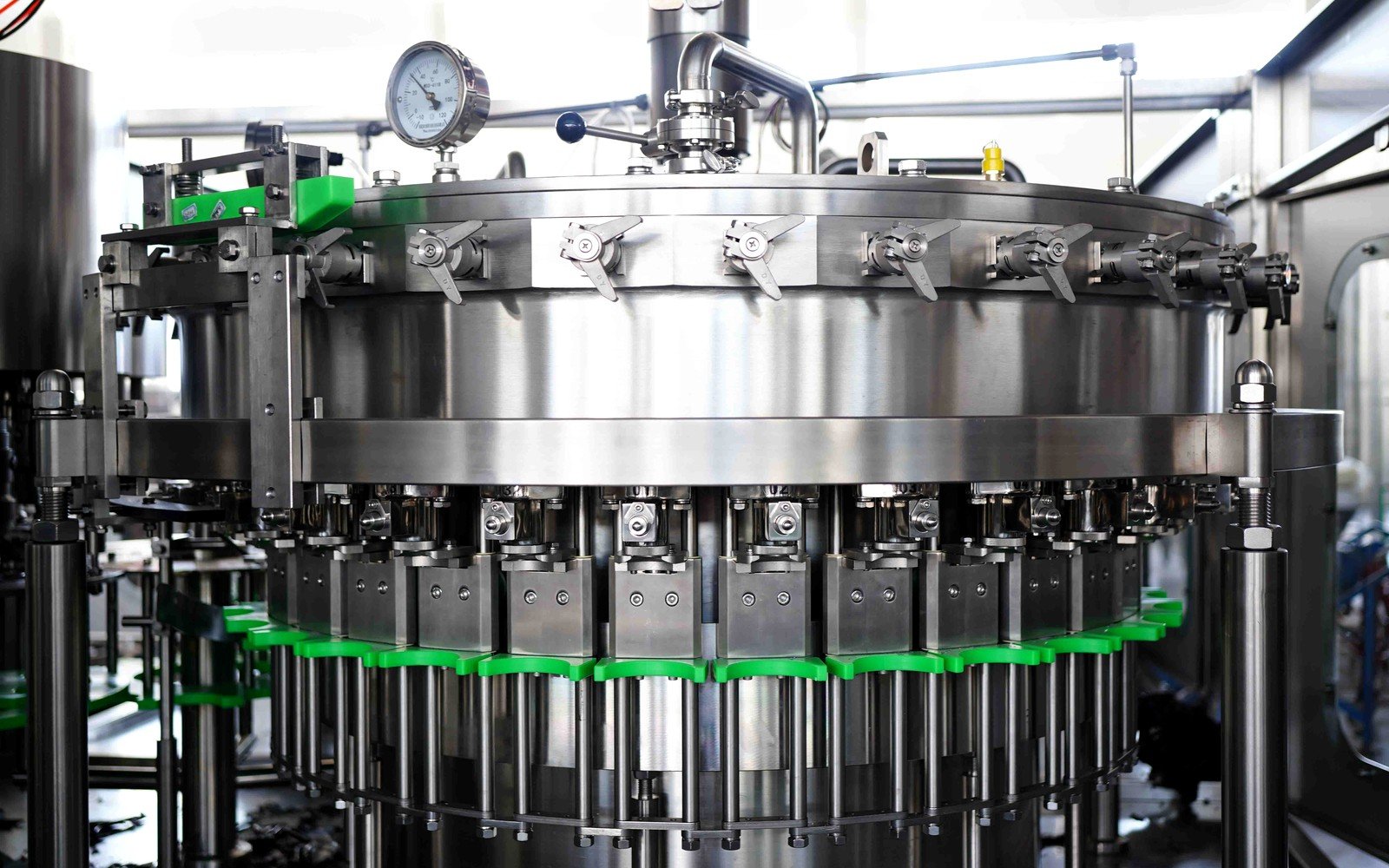
| Isobaric or pressure filling | Carbonated products requiring controlled pressure transfer | Product temperature, carbonation, pressure stability and package quality are critical | Representative product run with foam, carbonation and closure checks |
Selection mistakes that create expensive rework
- Selecting from a single easy sample while the production range includes foam, particles or large viscosity changes.
- Using headline bottles per hour without naming the fill size, bottle, product and good-output efficiency basis.
- Ignoring cleaning, drainability, product recovery and the time needed between recipes or allergens.
- Treating filling, capping, labeling and packing as separate purchases without interface responsibility.
- Accepting a model name before the supplier documents trial conditions, limits and the proposed acceptance method.
Make changeover a tested part of the specification
For mixed batches, define the two SKU configurations, parts, cleaning release and time to stable output. Use the changeover worksheet to turn a general flexibility claim into recorded evidence.
When an ordinary liquid filler is the wrong starting point
Before ranking shortlisted machines by speed or price, check whether the proposed process can protect the actual product in its intended package. Accurate dosing does not settle carbonation retention, thermal processing or material compatibility. Treat the following as selection gates: an unresolved gate needs a defined engineering review, not a higher score elsewhere on a comparison sheet.
Separate entrained foam from dissolved carbonation
A detergent that traps air and a sparkling drink that must retain dissolved carbon dioxide present different problems. For a carbonated beverage, ask the supplier to define the filling temperature, carbonation target, pressure sequence, controlled pressure release and closure operation as one process. Review the bottle and closure for that process, including stop and restart conditions. A non-carbonated water demonstration can show some handling or dosing functions, but it cannot demonstrate retained carbonation or the required finished-pack quality. Do not assume that adding an anti-foam nozzle converts an atmospheric filler into a counter-pressure system. If a future sparkling SKU is not included in the present design, price it as an unresolved expansion rather than an included recipe.
Decide the preservation route before selecting a hot-fill machine
Hot filling, chilled distribution and aseptic filling are not interchangeable equipment labels. Have the responsible product or process specialist define the approved preservation route and its operating limits before the machine is selected. For a hot-fill proposal, connect product heating and transfer, temperature at filling, the closure step and controlled cooling to the actual container specification. Check what happens to product during a stoppage and how restart permission is established. A heat-resistant valve alone does not establish a validated process, a suitable PET bottle or a shelf-life claim. Where aseptic operation is required, ask for a defined system boundary covering product treatment, package and closure treatment, the protected filling environment and the controls that maintain it. Do not accept a clean-looking enclosure as evidence that those functions exist.
Check the whole wetted path, not only the stainless-steel grade
Request a component-level contact-material schedule for the tank, transfer path, pump, valves, meter, hoses, seals and nozzle. Review it against the complete formulation and the proposed cleaning conditions, including concentration, temperature and exposure time. A metal grade printed in a quotation does not describe elastomers, plastics, surface details or drainability. Ask who confirms compatibility, what supporting documents apply to the supplied grades and which parts need replacement when the recipe or wash changes. Keep chemical compatibility separate from hygienic cleanability and from any destination-specific documentation. A statement that a machine is food grade is not a substitute for a clearly defined contact path and an agreed cleaning assessment.
Four decisions to document before releasing the specification
- Product protection
- Record whether dissolved gas, oxygen exposure, temperature or other product sensitivities constrain the process. Identify the person who approves each limit and how the filled, closed package will be checked; leave unmeasured performance explicitly open.
- Package under process conditions
- Identify the bottle and closure revisions used for pressure, heat, vacuum or cooling assessment. Include support and transfer conditions. A dimensionally compatible empty bottle is not yet evidence of a stable finished package.
- Included process equipment
- Mark whether conditioning, chilling or heating, controlled gas supply, closure treatment and cooling are included, supplied by others or not required. Attach utilities and control responsibilities to the relevant boundary, not just to a machine list.
- Decision and remaining work
- For each gate, state accepted, conditional or outside scope, with the evidence reference and remaining action owner. Connect any conditional item to the quote and acceptance plan so a purchasing decision does not silently turn an assumption into a guarantee.
Questions that change the filling-machine shortlist
Can I use the same filler for still water and sparkling drinks?
Only if the exact configuration is designed and demonstrated for both duties. Confirm pressure management, product temperature, filling-valve operation, container and closure compatibility, cleaning and the retained-gas acceptance check. Shared bottle sizes or a successful still-water trial do not establish a sparkling-drink capability.
Does buying a hot-fill machine guarantee room-temperature shelf life?
No. Shelf life depends on the formulation, approved process, package, closure and storage conditions, supported by appropriate validation. The equipment purchase must specify its part of that process and its limits. Do not select a generic temperature or a shelf-life promise from a machine catalogue.
Is 316L stainless steel enough to approve a filling machine?
No. It is only one material designation. Review the actual contact components, seals and hoses, the formulation and cleaning exposure, and the construction that can be accessed, cleaned and drained. Request the documents relevant to the supplied materials; do not infer whole-machine suitability from the frame or one vessel.
Use this review to define what must be checked, not as a ready-to-run production process. Allot Tech can help organize a China-sourced equipment inquiry around the product, package and unresolved engineering questions; process approval and validation remain project-specific.
Compare two shortlisted filling machines on the same basis
A shortlist should preserve more than a machine name and a nominal speed. For each candidate, identify the metering principle, proposed contact path, nozzle, supply arrangement and container-handling scope. State which current product and bottle combinations it must cover. Keep future combinations in a separate list so that an untested possibility is not presented as an included capability. A quotation can then distinguish supplied parts, options and unresolved engineering work.
Start the comparison with a shared test brief. Use the same identified product and pack revisions where practical, comparable product conditions and the same definition of an accepted result. Ask each supplier to state any departure from that brief before reviewing the results. Different configurations can still be compared, but the difference must be visible: a test using hand-positioned bottles does not provide the same handling evidence as an indexed machine with the proposed conveyor interfaces.
Choose challenges from your real operating window rather than combining unrelated extremes. A small fill may expose start-and-stop control, while a larger fill may expose the time required to deliver and settle the product. A narrow opening can make nozzle access important; a light or unstable bottle can make transport important. These are questions for a configured trial, not a rule that every project needs a particular nozzle or filling technology. State why each selected case could change the purchase decision.
| Result or limitation | Question before ranking the quote | Decision to record |
|---|---|---|
| A water test passes, the product remains untested | Which flow, foam, material and cleaning assumptions remain open? | Conditional shortlist; define the actual-product evidence still required |
| One fill size passes, the proposed range is wider | Which endpoint or difficult pack needs another run, and which parts change? | State a tested range and an unverified range separately |
| Average dose is acceptable, individual results are not | Are tare, measurement method, sampling order and head identity available? | Keep the deviation open; an average alone is not the agreed acceptance result |
| Dose is stable, required finished output is not | Does the boundary include handling, closures, rejects and interruptions? | Assess the proposed system and sustainable accepted output before adding heads |
Use the trial result to decide what can be specified
- Freeze the question and the comparison boundary. Agree what counts as a measured unit, when the observation begins and ends, and whether the run assesses dosing alone or a finished-pack process. Record the target, tolerance or quality basis and the measurement method before inspecting attractive results. Do not invent a universal tolerance from a brochure headline.
- Retain individual observations as well as summaries. Identify the head or station, sequence, configuration and any interruption. A range or average without the underlying run context can conceal a startup effect, a single difficult head or a changed supply condition. The purpose is to understand the evidence, not to select the neatest numbers.
- Separate feasible, conditional and unresolved conclusions. A promising sample does not settle every operating condition. Put the remaining combinations, additional tooling and required demonstrations beside the conclusion. Record who must provide the missing evidence and whether the proposed price assumes that evidence will be satisfactory.
- Compare the work around the filling cycle. Note preparation, replenishment, container placement, pack removal, inspection and changeover responsibility. A lower-cost dosing unit may be appropriate when the team can support those tasks. A more automated offer needs evidence that its interfaces and staffing assumptions fit the actual workflow.
- Carry the selected trial configuration into the RFQ and acceptance plan. List the product and pack revisions, supplied parts, excluded activities and the agreed remaining tests. If the final build uses a different product path or the formulation and packaging later change, define what must be reviewed rather than treating the earlier trial as permanent approval.
For example, a buyer choosing between two proposals should not average a dosing-only rate from one supplier with a finished-pack rate from another. Put both results back against the shared boundary, retain the different assumptions, and request the missing evidence. Price can then be discussed alongside the work and risk included in each offer. A small transparent comparison is more useful than a long scorecard containing unsupported ratings.
The outcome may be a selected configuration, a smaller verified operating range, a request for another trial, or a decision to pause that application. Each is useful if the reason is documented. Keep the evidence attached to the exact purchase requirement so production, quality and purchasing can understand the same decision without relying on a sales demonstration video.